Terminale · Voie générale et technologique · Voie professionnelle
Big Brother Is Watching
When Fiction Warns Reality · A learning journey that starts with George Orwell
In 1949, he imagined a world where a screen watches you at home, where the past is rewritten every day and where the government can make you believe that 2 + 2 = 5. He called it Nineteen Eighty-Four. Was it a fiction, or a warning?
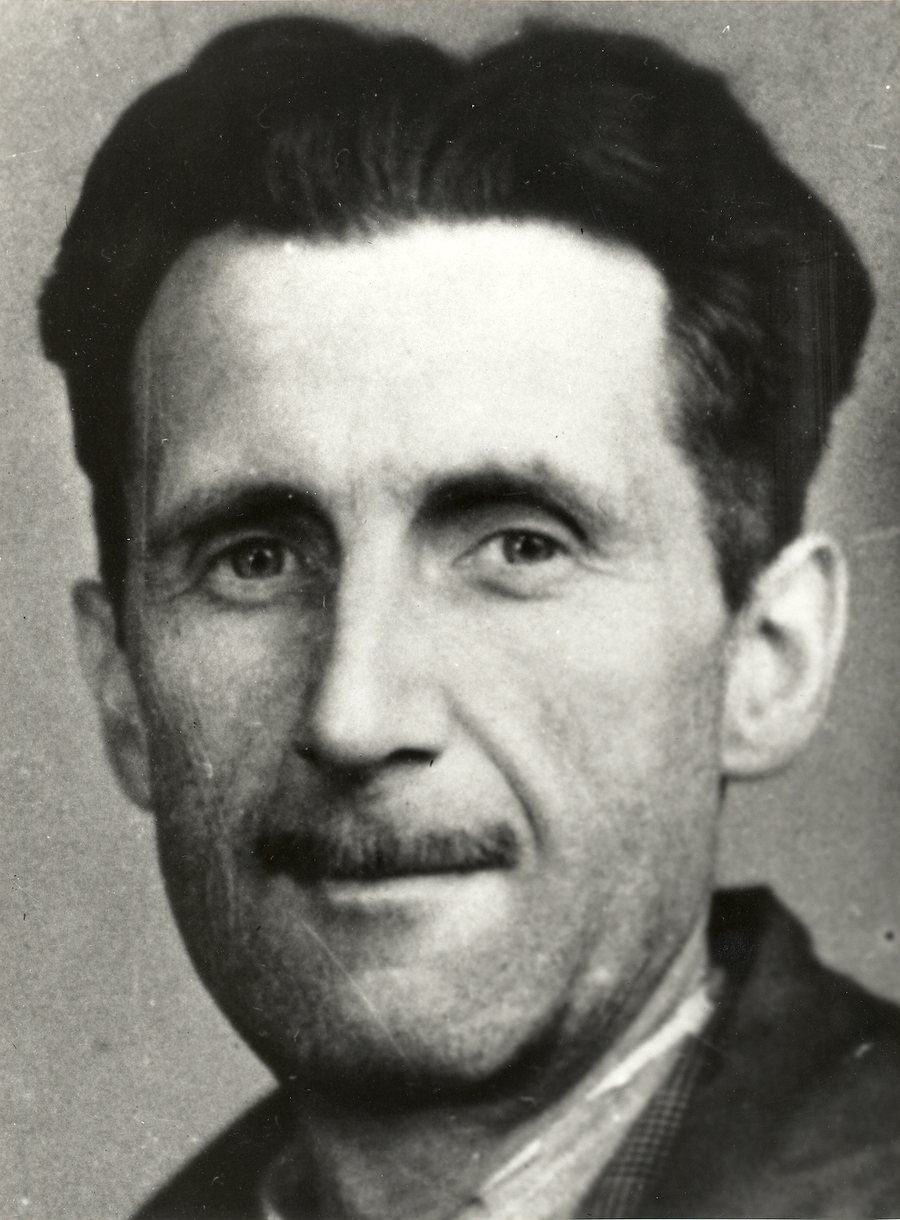
George Orwell (1903 to 1950), born Eric Arthur Blair: British writer, journalist and broadcaster, author of Animal Farm and Nineteen Eighty-Four, two books still read all over the world.
George Orwell in 1943, photo from his National Union of Journalists card · Author unknown, Wikimedia Commons, public domain
Message à transmettre à la classe
Orwell, ou l’homme qui avait vu venir les écrans
Pourquoi ce texte ?
En 1948, George Orwell est malade de la tuberculose. Il vit isolé sur une île écossaise, Jura, et tape à la machine un roman qu’il sait être peut-être son dernier. Ce sera 1984.
Il y raconte l’histoire de Winston, un employé de bureau qui passe ses journées à corriger de vieux journaux pour que le passé colle aux mensonges du pouvoir. Chez lui, un écran le regarde en permanence.
Ce que ça dit de nous aujourd’hui
Regardez votre téléphone. Il sait où vous étiez hier soir, ce que vous avez acheté, la vidéo que vous avez regardée trois fois. Personne ne nous l’a imposé, on l’a mis dans notre poche nous-mêmes.
Orwell n’avait pas prévu cela exactement. Mais il avait compris qu’on peut tenir les gens en contrôlant les mots et les images qu’ils reçoivent.
Ce que vous allez peut-être ressentir
Certains élèves trouvent ce livre étouffant. D’autres haussent les épaules en disant « de toute façon, je n’ai rien à cacher ». C’est une réaction intéressante, on en reparlera.
Ce qui n’a pas bougé depuis 1948
Winston a envie d’un endroit où personne ne le voit, et d’une personne à qui parler franchement. Vous avez sans doute envie de la même chose. C’est pour ça que ce vieux roman se lit encore.
Madame Carole Paoli Pompougnac
“If liberty means anything at all, it means the right to tell people what they do not want to hear.”
« Si la liberté signifie quelque chose, c’est le droit de dire aux gens ce qu’ils n’ont pas envie d’entendre. » George Orwell, préface écartée d’Animal Farm, gravée depuis 2017 à côté de sa statue, devant la BBC.
Introduction
What is at stake in this learning journey
Every day, your phone knows where you are. Cameras film the streets, the shops and the stations. Politicians, influencers and advertisers choose their words very carefully, sometimes to inform you, sometimes to hide the truth. None of this is new: more than seventy-five years ago, one British writer saw it coming, and turned his fears into two stories that the whole world still reads.
George Orwell did not try to predict the future. He wrote fiction to warn reality: a fable about animals who take power on a farm, and a novel about a man who works at the “Ministry of Truth”, where his job is to rewrite the past. These stories gave us words that are now in every newspaper: Big Brother, doublethink, Newspeak, Orwellian. And fiction itself can be used by power: you will discover how a secret agency paid for a cartoon of Animal Farm and changed its ending.
On this learning journey, you will meet Orwell through photos, recordings, a poem, songs, posters, paintings and films. You will read short extracts of his novels, take apart real news articles from 2017, when Nineteen Eighty-Four suddenly became a best-seller again, train your voice with demanding pronunciation work, debate a real 2026 question (should the police scan our faces in the street?), and learn how the passive voice can hide who did what. Finally, you will write the opening page of your own dystopia set in 2050, and present a five-minute warning to the class.
Why a learning journey?
Some words lock learning in place: one step after another, behind closed doors. A journey opens the road. You set off with your suitcase, you meet places, voices and ideas you did not expect, and you come back richer, with memories and knowledge that are truly yours. Nobody wants to travel to a dull destination: this one has been chosen to be worth the trip.
Pourquoi un learning journey ?
Le mot « séquence » enferme : une étape après l’autre, portes closes. Un voyage, lui, ouvre la route. Les élèves partent avec leur valise, rencontrent des lieux, des voix et des idées inattendus, et reviennent enrichis de souvenirs et de savoirs qui leur appartiennent. On ne donne à personne l’envie de partir en promettant une destination terne : la destination doit valoir le voyage.
How every session works
The journey, tab by tab
- 1 · Who was George Orwell? → a policeman, a tramp, a soldier, a BBC broadcaster, a writer
- 2 · Animal Farm → a fable about power, a song and seven commandments
- 3 · The CIA cartoon → the 1954 film that was secretly paid for, and its new ending
- 4 · Newspeak and doublethink → Nineteen Eighty-Four, posters, paintings, songs
- 5 · Pronunciation lab → say it like a slogan: word stress, weak forms, intonation
- 6 · Read the news → “alternative facts” and the return of 1984 (2017)
- 7 · Debate and the passive → “Mistakes were made”: who did it? Facial recognition in the street
- 8 · Final task → the first page of a 2050 dystopia and a five-minute warning speech
- On placement · PFMP → keep up while you are at work: three short slots a week, on your phone
L’intérêt de cette séquence dans les programmes
La séquence répond à un objet d’étude nommé explicitement par le programme d’anglais du cycle terminal, en terminale : « La dystopie, une catharsis sociétale ? » (axe 3, « Fictions et réalités »). Elle fait travailler les cinq activités langagières et la médiation, l’esprit critique face à l’information, la lecture d’images, de chansons et de films, et une prononciation exigeante.
Un seul contenu pour tous. Les élèves de la voie générale et technologique et ceux de la voie professionnelle suivent exactement le même parcours, aussi riche et aussi exigeant : mêmes documents, mêmes extraits, mêmes tâches, même tâche finale. Il n’existe pas de version allégée. Seuls les textes de référence et les formats d’examen diffèrent ; ils sont présentés côte à côte ci-dessous. Les trois paliers (B1, B1+, B2) ne correspondent pas à une voie : chaque élève commence au palier où il se sent solide et monte au suivant.
Fil conducteur : élever le niveau sans effrayer les élèves. Un contenu exigeant, rendu accessible par des étapes claires, des modèles, des enregistrements et trois paliers. Pas une minute sans objectif : chaque séance commence par une tâche d’entrée en cours et chaque minute est prévue dans le minutage proposé au professeur.
| Activité langagière (CECRL) et compétence | Où dans le parcours |
|---|---|
| Compréhension de l’oral | Biographie d’Orwell et poème (onglet 1), résumé d’Animal Farm (2), l’histoire du film financé par la CIA et sa bande-annonce (3), début de Nineteen Eighty-Four, vidéo de BBC News (4), extrait de Meet the Press (NBC, 6), débat (7), discours modèle (8), chansons (Muse, Radiohead, David Bowie, Rage Against the Machine) |
| Compréhension de l’écrit | Extraits courts d’Animal Farm et de Nineteen Eighty-Four (2 et 4), note des Archives nationales britanniques sur la bande dessinée de 1950 (3), essai Politics and the English Language (4 et 7), dépêche de l’agence AP du 24 janvier 2017 analysée en détail et comparée à CNNMoney, The Guardian, The Independent et BBC News (6), article de BBC News de janvier 2026 (7) |
| Expression écrite | Tâches à trois paliers à chaque séance, brève de presse (6), première page d’une dystopie de 2050 (8) |
| Expression orale en continu | Lecture expressive de slogans, de titres et d’un poème, présentation d’une affiche ou d’un tableau, discours d’alerte de 5 minutes (8) |
| Interaction orale | Débat sur la reconnaissance faciale (7), échange de 5 minutes après le discours (8) |
| Médiation | Expliquer en anglais simple à un voisin âgé ce que la CIA a changé dans le film (3) ; réécrire un titre de presse en anglais courant et inversement (6) ; transformer une phrase passive en phrase active pour dire qui a agi (7) |
| Phonologie et prosodie | Un atelier « Say it right » à chaque séance, un laboratoire complet (5), formes faibles du passif (7) |
| Grammaire | La voix passive (formes à tous les temps, complément d’agent, passif avec modal, passif de « reporting » : is said to), deux leçons et des exercices à trois paliers (7), réemployée dans la tâche finale (8) |
| Culture et esprit critique | Propagande, censure, réécriture du passé, fait et opinion, vérification des sources, surveillance et libertés (onglets 3, 4, 6, 7 et 8) |
Ancrage dans les programmes et le référentiel
Voie générale et technologique · Terminale
Programme d’anglais du cycle terminal (BO n° 22 du 29 mai 2025, annexe « Programme d’anglais pour les classes de lycée général et technologique »).
Axe 3 « Fictions et réalités » : « Comment s’articulent réalité et fantasme dans la construction d’un récit national ? Dans quelle mesure la fiction se nourrit-elle du réel pour le questionner, le sublimer ou le réinventer ? » Objet d’étude : « La dystopie, une catharsis sociétale ? ».
Lexique « Anticiper et avertir » proposé par le programme. B1 : to predict, threat, prospective, gloomy, inhumane, fantasy, to be aware of, utopian/dystopian. B2 : to threaten, to ward off (bad luck), a bad omen, dysfunctional, to impend, speculative, to loom, to feed on reality, visionary, expiatory, to enhance reality, incoming danger, to bode ill, to forecast, caveat, forerunner, harbinger. Lexique « Représentation et dénonciation », B1 : to show, to illustrate, to symbolise, to denounce, to question, to challenge, to expose ; B2 : to depict, to portray, to witness, to epitomise, to testify, to cast doubt on, to debunk.
Niveaux : le programme vise B1 en fin de terminale en LVB et B2 en LVA.
Phonologie : le programme définit la prosodie comme « incluant l’intonation, l’accent de mot, l’accent de phrase, le rythme et le débit » ; en terminale, il vise les schémas intonatifs et l’accentuation du mot selon sa composition (onglet 5).
Liens possibles : axe 4 « Enjeux et formes de la communication » (objets « Chacun sa vérité ? Le défi du complotisme » et « Forme et portée du discours politique » : onglets 6 et 7) ; axe 5 « Citoyenneté et mondes virtuels » (objet « La vie connectée est-elle synonyme de vie exposée ? » : onglets 7 et 8) ; axe 6 « Le Royaume-Uni et ses nations » (objet « La BBC, vecteur de soft power britannique ? » : Orwell à la BBC, onglet 1).
Voie professionnelle · Terminale bac pro
Programme de langues vivantes des classes préparant au baccalauréat professionnel (arrêté du 3 avril 2019, BO spécial n° 5 du 11 avril 2019). Du niveau B1 aux niveaux B1+/B2 (niveau attendu / niveau visé en langue A), l’élève s’entraîne notamment à :
- « comprendre, analyser et rendre compte d’articles de presse, de documentaires, d’affiches, de spots publicitaires, de campagnes d’information » (onglets 4 et 6) ;
- « comprendre, analyser et rendre compte d’un événement historique ou d’actualité » (onglets 3 et 6) ;
- « repérer dans un propos les éléments relevant de l’argumentation » et « identifier les divergences de points de vue » (onglets 6 et 7) ;
- « s’exprimer à l’écrit et à l’oral au sujet d’une problématique sociétale, éthique ou environnementale » et « au sujet d’un thème ou objet culturel » (onglets 2, 4 et 8) ;
- « participer à un débat, à une table ronde, défendre et justifier sa position, réfuter celle de son interlocuteur, chercher à convaincre » (onglet 7) ;
- « élaborer un propos à dominante argumentative, pour une présentation orale ou écrite » (onglet 8).
Thèmes d’étude : « personnages historiques et personnalités célèbres », « grandes œuvres célèbres (littérature, musique, peinture, sculpture, cinéma, photographie) », « médias (presse, radio, télévision), réseaux sociaux et internet (pratiques et enjeux) ». Le programme demande aussi aux professeurs de « prendre toute leur part dans la lutte contre la manipulation de l’information ».
Épreuve (arrêté du 17 juin 2020, annexe V, BO n° 30 du 23 juillet 2020) : l’onglet 8 entraîne à la situation B, 10 minutes, avec une expression orale en continu de 5 minutes maximum puis une interaction de 5 minutes maximum ; la prise de parole « ne peut pas consister en la lecture d’un texte préalablement rédigé in extenso ».
Niveaux attendus à l’examen : B1+ en langue A, A2+ en langue B ; niveaux visés en fin d’études : B2 en langue A, B1 en langue B (programme de 2019).
Même parcours, mêmes tâches pour les deux voies. Les longueurs indiquées dans la tâche finale sont des paliers de progression, au choix de l’élève :
| Palier | Écrit (onglet 8) | Oral (onglet 8) | Repères officiels |
|---|---|---|---|
| B1 | 150 à 180 mots | 4 min, carte de mots-clés | LVB voie générale (niveau visé) · LVB voie pro (niveau visé) |
| B1+ | 180 à 220 mots | 4 à 5 min, quelques mots-clés | LVA voie pro (niveau attendu à l’examen) |
| B2 | 220 à 280 mots | 5 min, sans notes rédigées | LVA voie générale (niveau visé) · LVA voie pro (niveau visé) |
Sources : programme d’anglais du cycle terminal (BO n° 22 du 29 mai 2025, annexe 4) ; programme de langues vivantes de la voie professionnelle (BO spécial n° 5 du 11 avril 2019) ; définition de l’épreuve de langue vivante du baccalauréat professionnel (BO n° 30 du 23 juillet 2020).
Why this learning journey fits the programme
The official programme for Terminale asks you to explore how “fiction feeds on reality to question it”, and suggests one precise subject: “Dystopia, a catharsis for society?” The vocational programme asks you to understand and analyse press articles, posters and campaigns, to identify different points of view, to debate and defend your position, and to speak about a cultural work and an ethical issue. In both cases, you are expected to think critically about the information you receive, and to speak clearly and confidently. Everybody follows the same journey.
Mode d’emploi. Huit onglets de cours, soit environ douze heures de 55 minutes : une heure pour chacun des onglets 1, 2, 3 et 5, deux heures pour chacun des onglets 4 (surveillance, puis novlangue), 6 (lire, puis vérifier la presse), 7 (le passif, puis le débat) et 8 (écrire, puis préparer le discours), puis les séances de présentation (10 minutes par élève ou par binôme, quatre à cinq passages par heure). Un onglet « On placement · PFMP » permet aux élèves de bac pro en période de formation en milieu professionnel de suivre le même parcours en autonomie, puis de revenir sans rupture. Chaque séance s’ouvre sur une tâche d’entrée en cours (bell-ringer) de cinq minutes, puis suit le minutage indiqué dans l’encadré professeur. Les réponses s’affichent avec le bouton Answers ; l’aide en français avec + Français.
Dans chaque encadré professeur : un minutage minute par minute ; les moments de bascule (le début pendant l’appel, les transitions, la fin, l’arrivée de la classe suivante pendant que vous publiez les exercices ou remplissez PRONOTE) ; une solution si la technique lâche ; un encadré « Keeping the room calm » avec une tâche de repli, des façons de recadrer en privé et la conduite à tenir face à un refus, sans escalade. Tout est imprimable (bouton Imprimer) : chaque tâche existe aussi en fiche à trous ou document à compléter, papier ou ENT.
Astuce pratique. Le bell-ringer est visible à l’écran avant l’entrée des élèves : ouvrez la séance, cliquez sur Project full screen avant la sonnerie. Les élèves se mettent au travail en entrant, et vous faites l’appel pendant qu’ils travaillent.
Droits. Orwell est mort en 1950 : ses œuvres sont dans le domaine public au Royaume-Uni depuis le 1er janvier 2021 (70 ans après l’année du décès), mais restent protégées aux États-Unis (Animal Farm jusqu’en 2040, Nineteen Eighty-Four jusqu’en 2044). Les extraits cités ici restent courts, à des fins d’étude. Sources : The Guardian, 1er janvier 2021 ; BBC Culture, 6 novembre 2023.
Les principes qui fondent cette séquence sont réunis dans la Charte du cours →
Look at this man. Work alone, in your notebook.
- Describe him in three sentences (age, face, clothes, expression).
- Guess: what was his job? Give one clue from the photo.
- Have you ever heard the expression “Big Brother is watching you”? Where?
Useful: he looks… · he seems… · he might be a… · judging by his…
Entrée en cours. Cadre projeté avant l’arrivée des élèves ; appel pendant l’écriture. Réutilisation (minutes 5 à 9) : trois descriptions lues, deux hypothèses de métier notées au tableau (souvent « journaliste », « soldat », « professeur »). La photo vient de sa carte du syndicat des journalistes (1943) : on vérifie les hypothèses avec l’écoute. Pour la question 3, on relève les usages connus (émission de téléréalité, caméras, réseaux sociaux) : ils serviront dans l’onglet 4.
Tab 1 · Axis 3 · Fictions and realities
Who was George Orwell?
A writer who stood up to power
George Orwell is the pen name of Eric Arthur Blair. He was a policeman, a tramp, a soldier, a radio producer and a journalist before he became one of the most famous writers in the world.
His two most famous books are short and easy to begin, but they never leave you: Animal Farm (1945) and Nineteen Eighty-Four (1949). Today, the adjective Orwellian describes a society where the government controls information, watches people and twists the meaning of words.
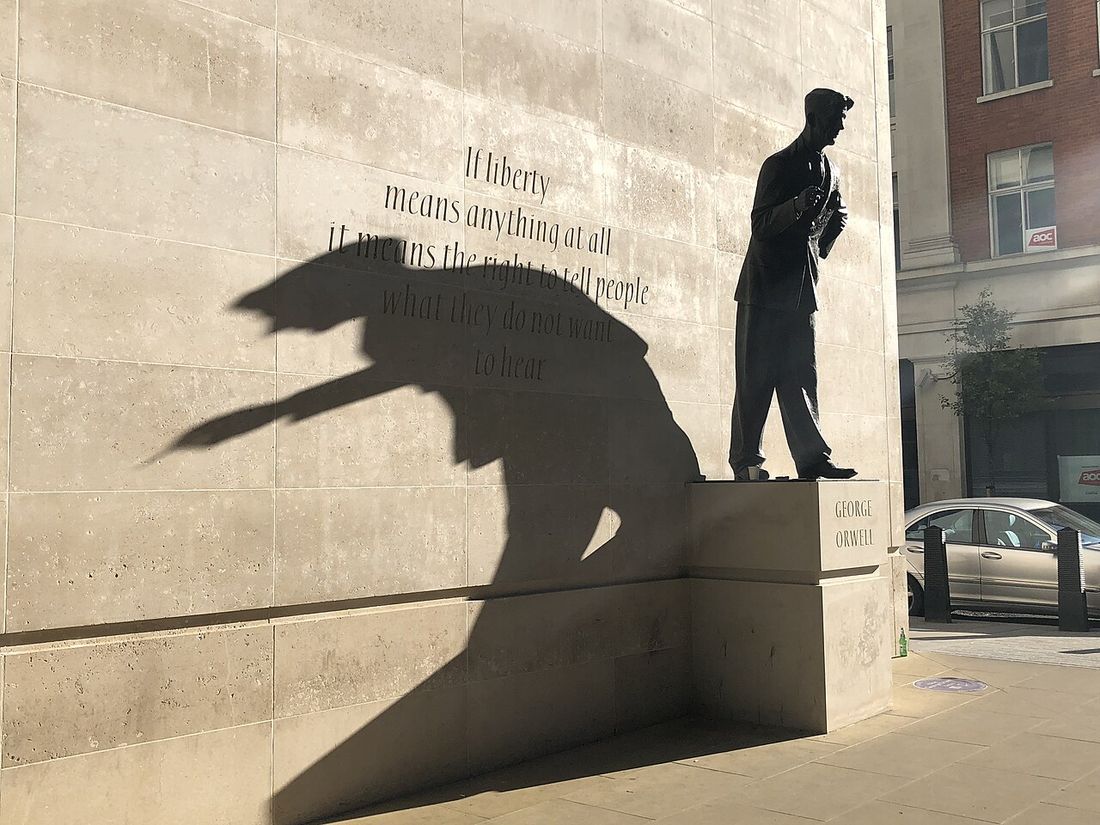
Since November 2017, his statue has stood in front of the BBC in London, where he worked during the Second World War.
Eric Blair becomes George Orwell
Computer voices: Emma and George (British English).
Transcript (only after the two listenings)
George Orwell was the pen name of Eric Arthur Blair. He was born on the twenty-fifth of June 1903, in Motihari, in India, where his father worked for the British administration. He grew up in England and won a scholarship to Eton, one of the country’s most famous schools. One of his teachers there was Aldous Huxley, who later wrote another famous dystopia, Brave New World. In 1922, instead of going to university, he joined the Indian Imperial Police in Burma. Five years later, he resigned. He later wrote that he had seen the dirty work of Empire at close quarters.
Back in Europe, he chose to live among the poor, washing dishes in Paris and tramping in London, and he wrote about it. In the Spanish Civil War, he fought against fascism and was shot in the neck. From 1941 to 1943, he worked for the BBC, preparing radio programmes for listeners in India. Then came the two books that made him famous: Animal Farm, in 1945, and Nineteen Eighty-Four, in 1949. He wrote much of his last novel on Jura, a remote Scottish island. He died of tuberculosis in London on the twenty-first of January 1950. He was only forty-six.
First listening: the big picture
Second listening: the details
Milestones
1903 → Eric Arthur Blair is born on 25 June in Motihari, in British India.
1922 → 1927 → He serves in the Indian Imperial Police in Burma, then resigns.
1933 → Down and Out in Paris and London, his first book, is published under the name George Orwell.
1937 → Fighting against fascism in the Spanish Civil War, he is shot in the neck.
1941 → 1943 → He works for the BBC Eastern Service, preparing programmes for listeners in India.
1945 → Animal Farm is published on 17 August, after several publishers refused it.
1949 → Nineteen Eighty-Four is published in June.
1950 → He dies of tuberculosis in London on 21 January, aged 46.
2017 → His statue is unveiled outside the BBC on 7 November.
2021 → His works enter the public domain in the United Kingdom on 1 January.
A statue that talks back
The sculptor Martin Jennings explained that “Orwell was the last person to be on a plinth”. So he made him stoop towards the people walking by, “more that he’s on a soapbox, engaging an audience”, with a roll-up cigarette in his hand. On the wall behind him, these words are carved: “If liberty means anything at all, it means the right to tell people what they do not want to hear.” The words come from a preface that Orwell wrote for Animal Farm but that was never used. Jennings called them “a challenging selection of words for a public service broadcaster”.
- Describe the statue: position, gesture, clothes, what is behind him.
- Why did the sculptor refuse to make a proud, straight statue?
- Why is this quotation “challenging” for the BBC? Think: who does a public broadcaster have to tell things to?
Sources: BBC News, “Why George Orwell is returning to the BBC”, November 2017 · Martin Jennings, sculptor’s website
“The Italian Soldier Shook My Hand” (George Orwell)
In Spain, Orwell met a young Italian volunteer whose name he never knew. He wrote this poem about him in 1939; it was published in 1943, at the end of his essay Looking Back on the Spanish War. Here are the last two of its nine stanzas.
Between the white and the red,
Between the bullet and the lie,
Where would hide your head?
[…]
But the thing that I saw in your face
No power can disinherit:
No bomb that ever burst
Shatters the crystal spirit.
Computer voice: George (British English), reading slowly.
- Find three pairs of opposites in the first stanza. Which pair is the most surprising, and why?
- “The bullet and the lie”: what can kill a man, according to Orwell?
- What is “the crystal spirit”? Can a bomb destroy it? Explain in one sentence.
- Say it: read the second stanza aloud with the recording. Stress the strong words: thing, saw, face, power, bomb, burst, crystal, spirit.
Words from the official programme: anticipate and warn
Match each word with its definition.
Word stress: the suffix moves the stress
In English, one syllable is strong and the others are weak. With the suffixes -ian, -ic, -ical and -ity, the stress falls on the syllable just before the suffix. With -graphy and -logy, it falls on the syllable just before -graphy or -logy.
| Base word | The stress moves |
|---|---|
Each word is said once. Listen, then repeat it three times, louder and longer on the red syllable.
Your turn: find the strong syllable
Apply the rule first, then check with the recordings.
The words on the BBC wall
Shadowing means speaking at the same time as the voice, like a shadow. Step 1: listen to the slow version. Step 2: speak with the slow version. Step 3: speak with the normal version, without reading.
Speak or write: a portrait of Orwell
George Orwell was born in India in 1903. In 1922, he joined the police in Burma, but he resigned five years later. He then lived among the poor in Paris and London, and in 1937 he was shot in the neck in Spain. From 1941 to 1943, he worked for the BBC. In my opinion, his time in Burma made him a writer who stood up to power, because he saw how an empire treated the people it ruled.
Orwell chose a pen name. Why do some writers, artists and journalists hide their real name? Is it a way of protecting themselves, or of becoming someone else?
George Orwell, de son vrai nom Eric Arthur Blair (1903 to 1950), né en Inde, a été policier en Birmanie, a vécu parmi les plus pauvres à Paris et à Londres, a combattu le fascisme en Espagne, où il a été blessé à la gorge, puis a travaillé à la BBC pendant la guerre. Ses deux grands romans sont Animal Farm (La Ferme des animaux, 1945) et Nineteen Eighty-Four (1984, 1949). Retiens la règle d’accentuation : avec -ian, -ic, -ical, -ity, l’accent tombe sur la syllabe juste avant le suffixe.
| Minutes | Déroulement (55 min) |
|---|---|
| 0 → 5 | Bell-ringer affiché avant l’entrée, appel pendant que les élèves écrivent. |
| 5 → 9 | Réutilisation : descriptions, hypothèses de métier, « Big Brother » au tableau. |
| 9 → 20 | Deux écoutes avec les deux quiz, puis transcription ; frise lue en chœur (dates en anglais). |
| 20 → 27 | La statue : description guidée à l’oral, citation lue, question 3 en binômes. |
| 27 → 34 | Le poème : écoute, recherche des oppositions, lecture à voix haute de la dernière strophe. |
| 34 → 44 | Say it right : règle, écoute, répétition chorale puis individuelle, quiz, shadowing de la citation de la BBC. |
| 44 → 52 | Production à trois paliers : chacun commence où il se sent solide ; les plus rapides montent au palier suivant. |
| 52 → 55 | Ticket de sortie : « Orwell in one word, and why ». |
| Prolongement | Mots du programme (appariement) à la maison, ou en ouverture de l’onglet 2. |
Moments de bascule
- Début : photo et trois consignes projetées (ou fiche papier posée sur les tables) avant que les élèves s’assoient : ils écrivent pendant l’appel, sans consigne orale.
- Transitions : la consigne suivante est toujours déjà visible sous l’activité en cours. On enchaîne l’écoute dès la dernière hypothèse ; on passe du poème au Say it right par la lecture chorale, sans pause.
- Fin : ticket de sortie à la 52e minute, sur papier, ramassé à la porte. On range après le ticket, pas avant.
- Interclasse : pendant que vous publiez l’appariement sur l’ENT ou PRONOTE, la classe suivante trouve le bell-ringer de l’onglet 2 déjà affiché.
- Si la technique lâche : vous lisez la transcription deux fois (normalement, puis plus lentement) ; frise et poème sur la fiche papier ; le Say it right se fait à votre voix.
Keeping the room calm · Garder une classe calme
- Tâche de repli : sur la fiche, recopier la frise en ne gardant que cinq dates et écrire une phrase au prétérit pour chacune. Courte, faisable seul, utile pour la production.
- Consignes visibles : la consigne de chaque activité reste affichée ou écrite sur la fiche : un élève qui décroche peut raccrocher sans demander « on fait quoi ? ».
- Recadrer en privé : on se place à côté de l’élève, à voix basse, et on montre la consigne du doigt : « Tu en es où ? Commence par la question 1. » Pas de remarque publique, pas de commentaire sur l’attitude.
- Places et rôles : pour le travail sur la statue, un élève lit la citation, un autre note les réponses du binôme ; un élève agité peut être « maître du temps » (il annonce les minutes restantes).
- Si un élève refuse : on ne négocie pas devant la classe et on ne hausse pas le ton : « D’accord, je repasse dans cinq minutes. » On note discrètement, on continue avec les autres, on reprend en tête-à-tête à la fin si besoin. Certains élèves ne joueront pas le jeu ce jour-là : la séance continue quand même.
Sources : The Orwell Foundation (biographie, « About George Orwell », texte du poème, daté de 1939 et publié dans New Road en 1943) ; Encyclopaedia Britannica (Eton, Aldous Huxley parmi ses professeurs) ; The Open University, « Making Britain » (BBC Eastern Service, 1941 to 1943) ; BBC News et The Guardian, 7 novembre 2017 (statue de Martin Jennings, citation de la préface écartée d’Animal Farm). Charte du cours →
Imagine that the animals of a farm chase away the farmer and run the farm themselves. Work alone, in your notebook.
- Write three rules they paint on the barn wall. Start with: No animal shall… or All animals…
- Which animal becomes the leader? Why that one?
Ideas: sleep in a bed · wear clothes · drink alcohol · kill another animal · walk on two legs · work · vote · equal · free
Entrée en cours. Cadre projeté avant l’entrée ; appel pendant l’écriture. Réutilisation (minutes 5 à 9) : cinq règles d’élèves au tableau ; on les comparera aux sept commandements d’Orwell après l’écoute. La structure No animal shall… est celle du roman.
Tab 2 · Fiction and power
Animal Farm: a fable about power
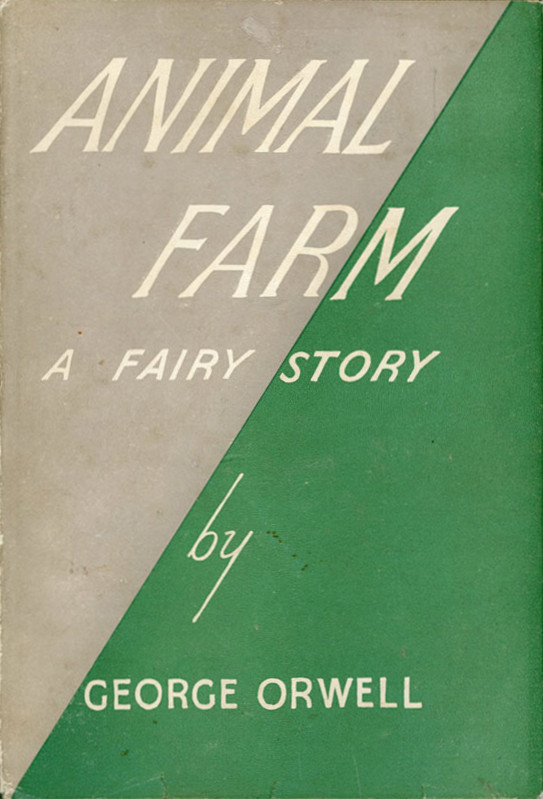
“A Fairy Story”
Look at the cover: Orwell called his book a fairy story. It is short, the characters are animals, and a child can follow the plot. But it is a fable: a story with animals that teaches a lesson about human beings.
Orwell finished it by the middle of 1944. Publishers were afraid of it: it attacked the Soviet Union, an ally of Britain in the war. It was finally published on 17 August 1945, and it is still read all over the world today.
The story in two minutes
Computer voice: Emma (British English).
Transcript (only after the two listenings)
Animal Farm is a short novel that Orwell called a fairy story. On Manor Farm, in England, an old pig called Old Major dreams of a world without humans, where animals live as equals, with no masters. After his death, the animals rebel and chase away the drunken farmer, Mr Jones. They rename the farm Animal Farm and paint seven commandments on the wall. The last one says: All animals are equal. But little by little, the pigs, who are the cleverest animals, take power. Their leader, Napoleon, chases away his rival, Snowball, with the help of fierce dogs. Squealer, a pig who speaks very well, explains every decision, and changes the past when necessary. Boxer, the strongest and most loyal horse, works harder and harder. In the end, the commandments are replaced by a single one: All animals are equal, but some animals are more equal than others. The pigs now walk on two legs, and the other animals can no longer tell the pigs from the men. Orwell wrote the book as a satire of the Soviet Union under Stalin.
Who is who?
Match each character with what he does in the story.
Three short extracts
1. The rule of the sheep. The commandments are too long for some animals to remember, so they are reduced to one maxim, which the sheep bleat for hours:
Near the end, when the pigs start walking on their hind legs, the sheep bleat a new version: “Four legs good, two legs better!”
2. The last commandment. At the end of the book, there is nothing left on the wall except a single commandment:
BUT SOME ANIMALS ARE MORE EQUAL THAN OTHERS
3. The last sentence of the book. Through the window of the farmhouse, the animals watch the pigs and the human farmers playing cards together and quarrelling:
George Orwell, Animal Farm (1945), chapters 3 and 10 · Short extracts quoted for study. Orwell’s works are in the public domain in the United Kingdom since 2021.
How do the pigs twist words?
“Beasts of England”: the song of the revolution
In chapter 1, Old Major teaches the animals a song from his childhood. It becomes the hymn of the revolution. Here are its first four lines, read aloud:
Beasts of every land and clime,
Hearken to my joyful tidings
Of the golden future time.
- Which two words rhyme? What is clime? (a poetic word for climate, or region)
- What does the song promise? Find two words that make it sound old and solemn.
- Later in the book, Napoleon bans this song and replaces it with another one. Why would a new leader ban the song of the revolution?
Contrastive stress: the voice shows the trick
In English, you stress the word that brings a contrast or new information. Listen: the voice jumps on SOME and MORE, because they contradict ALL and EQUAL.
The second sentence has four strong beats, like a march. Clap on each red word while you say it.
The book nobody wanted to publish
Orwell finished Animal Farm by the middle of 1944. Several publishers turned it down. According to the Orwell Foundation, it was delayed by “publishers’ timidity, and the covert pressure exerted by a Russian spy working for the Ministry of Information”, the British government department in charge of wartime information and censorship. The book finally appeared in August 1945. The preface that Orwell wrote about this experience, “The Freedom of the Press”, was not printed with the book: it is the source of the words carved next to his statue at the BBC (tab 1).
Your opinion in one sentence: Should a government ever stop a book from being published? I believe that… because…
Speak or write: a fable about power
At first, the rule was: No animal shall sleep in a bed. Then the pigs moved into the farmhouse, and the rule became: No animal shall sleep in a bed with sheets. In the end, the pigs slept in the beds every night, and nobody remembered the first rule.
Why do you think Orwell chose animals rather than humans? Is a lesson easier to accept when it comes from a fable?
Animal Farm (La Ferme des animaux, 1945) est une fable : les animaux chassent le fermier, puis les cochons prennent le pouvoir et trahissent la révolution. Orwell vise l’Union soviétique de Staline, mais la leçon vaut pour tout pouvoir qui confisque une révolution. Retiens l’accent de contraste : on accentue le mot qui contredit, comme SOME et MORE dans All animals are equal, but some animals are more equal than others.
| Minutes | Déroulement (55 min) |
|---|---|
| 0 → 5 | Bell-ringer affiché avant l’entrée, appel pendant l’écriture. |
| 5 → 9 | Réutilisation : règles d’élèves au tableau. Couverture de 1945 : « a fairy story », définition de la fable. |
| 9 → 19 | Deux écoutes, appariement des personnages, lecture de l’encadré « Beyond the farm ». |
| 19 → 29 | Trois extraits : lecture expressive par le professeur, quiz en binômes, remarque sur la répétition de la dernière phrase. |
| 29 → 36 | « Beasts of England » : écoute, rythme frappé dans les mains, questions 1 à 3. |
| 36 → 43 | Say it right : accent de contraste, chœur puis individuel, phrase de quatre temps frappée. |
| 43 → 52 | Production à trois paliers ; les règles du bell-ringer servent de point de départ. |
| 52 → 55 | Ticket de sortie : un nouveau slogan de mouton pour une situation actuelle (quatre mots maximum). |
| Prolongement | Encadré « Real life » (le livre que personne ne voulait publier) : lecture à la maison, phrase d’opinion à l’oral au début de l’onglet 3. |
Moments de bascule
- Début : consigne affichée ou écrite au tableau avant l’entrée ; les élèves rédigent leurs règles pendant l’appel.
- Transitions : les règles des élèves restent au tableau et servent à la fois après l’écoute et pour la production : rien à réexpliquer. Le quiz des extraits se fait en binômes, crayon en main, dès la fin de la lecture.
- Fin : ticket de sortie (slogan de mouton, quatre mots) écrit sur un papier, lu par trois élèves à la porte.
- Interclasse : l’encadré « Real life » est à lire à la maison : vous le publiez sur l’ENT pendant que la classe suivante fait son bell-ringer.
- Si la technique lâche : résumé lu par vous, extraits et chanson sur la fiche papier, rythme de « Beasts of England » frappé dans les mains.
Keeping the room calm · Garder une classe calme
- Tâche de repli : recopier les deux versions du commandement (« Four legs good, two legs bad » / « better ») et écrire en une phrase ce qui a changé et pourquoi.
- Consignes visibles : le tableau des personnages et les questions des extraits sont sur la fiche ; le binôme peut avancer sans attendre le professeur.
- Recadrer en privé : on se place à côté de l’élève, à voix basse, et on montre la consigne du doigt : « Tu en es où ? Commence par la question 1. » Pas de remarque publique, pas de commentaire sur l’attitude.
- Places et rôles : pour « Beasts of England », un élève frappe le rythme pour sa rangée ; pour le quiz, un lecteur et un secrétaire par binôme, rôles inversés à mi-parcours.
- Si un élève refuse : on ne négocie pas devant la classe et on ne hausse pas le ton : « D’accord, je repasse dans cinq minutes. » On note discrètement, on continue avec les autres, on reprend en tête-à-tête à la fin si besoin. Certains élèves ne joueront pas le jeu ce jour-là : la séance continue quand même.
Lecture intégrale possible en anglais (texte court, environ 30 000 mots) ou en traduction pour les élèves qui le souhaitent. Les correspondances historiques (Napoléon / Staline, Boule de Neige / Trotski) sont présentées comme une lecture habituelle, pas comme une clé unique. Sources : George Orwell, Animal Farm (1945), chapitres 1, 3 et 10 ; The Orwell Foundation (biographie : rédaction achevée mi-1944, publication retardée, parution en août 1945) ; date de publication du 17 août 1945. Charte du cours →
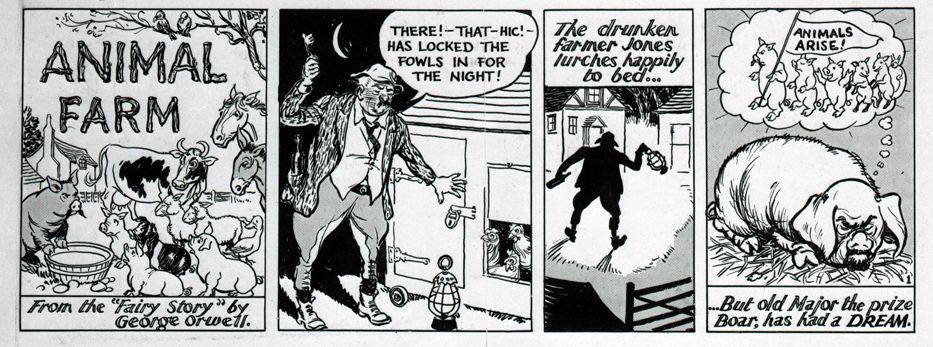
This comic strip of Animal Farm was drawn in 1950. A government paid for it and sent it to newspapers in other countries. Work alone.
- Which government do you think paid for it? Why?
- Why would a government pay for a comic strip rather than a speech or a newspaper article?
Useful: I guess it was… · because… · a comic strip is more… · people are more likely to…
Entrée en cours. Appel pendant l’écriture. Réutilisation (minutes 5 à 9) : on recueille les hypothèses (URSS ? États-Unis ? Royaume-Uni ?) sans trancher. Réponse en fin de séance, dans l’encadré « Real life » : le Foreign Office britannique. L’effet de surprise prépare la question de fond : qui paie une œuvre, et pour quoi faire ?
Tab 3 · Art, power and propaganda
The cartoon the CIA paid for
In 1954, a British studio released the cartoon of Animal Farm. For almost fifty years, the public did not know that the American intelligence agency, the CIA, had secretly paid for it, and that the ending had been changed. Today, you investigate: who paid, what was changed, and why it matters.
The trailer (1954)
Trailer of the 1954 film (Rotten Tomatoes Classic Trailers, 2 min 18). If the video does not load: watch it on YouTube.
Bande-annonce : https://www.youtube.com/watch?v=p-vdxVGscH8
Watch twice
First viewing: list three adjectives the trailer uses to sell the film. What kind of audience does it target: children, adults, or both?
Second viewing: does the trailer tell you that the film is political? Note one image or one sentence that shows it, or that hides it.
A secret behind the drawings
Computer voices: George and Emma (British English).
Transcript (only after the two listenings)
In 1951, the screen rights to Animal Farm were bought from Orwell’s widow, Sonia. The buyers were working for the CIA, the American intelligence agency, which paid for the rights in secret. The producer, Louis de Rochemont, hired a British studio run by a married couple of animators, John Halas and Joy Batchelor. About eighty animators worked on the film, which was completed in April 1954. It was the first animated feature film produced in England.
But the story was changed. In Orwell’s book, the pigs and the humans end up looking exactly the same. In the film, the humans are not mentioned at the end: the other animals revolt against the pigs, and they win. Joy Batchelor’s daughter remembers at least nine versions of the script, and heated discussions about the ending. John Halas later defended the hopeful ending: in his view, you cannot send millions of people home puzzled. The secret was kept from the public for almost fifty years.
Check your understanding
Book or film: two endings
The animals look through the window at the pigs and the men. “Already it was impossible to say which was which.” Nothing is solved: the revolution has been betrayed, and the animals are alone with their discovery.
The human farmers are not part of the ending. Benjamin, the old donkey, rallies the animals of the farm and of the nearby farms. Together they storm the farmhouse and overthrow Napoleon and his pigs. The ending is a victory.
Contrast again: book and film are stressed because they are opposed.
Think like a film critic
- Which ending is more hopeful? Which is closer to Orwell’s warning?
- In 1954, the Cold War had started. Why would the CIA prefer an ending where the animals overthrow the pigs?
- John Halas said: “You can not send home millions in the audience being puzzled.” Explain his idea in your own words. Do you agree?
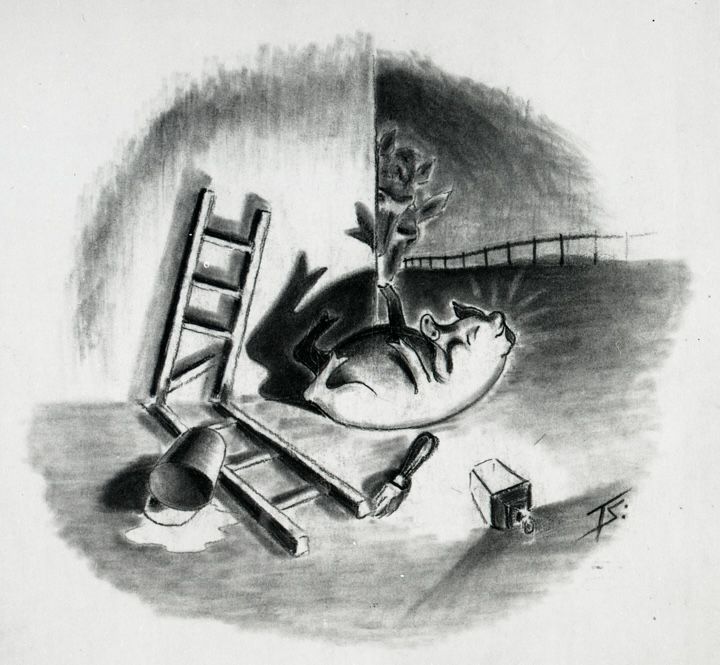
This is how the British artists imagined Squealer, the pig who explains every decision. A cartoonist must show a character’s personality in one drawing.
- Describe his body, his face and his gesture.
- Which details show that he is a talker, a persuader? Which details show that he is not honest?
- If Squealer lived today, what job would he have? Justify.
The answer to the bell-ringer: the British Foreign Office
According to The National Archives, “in 1950 the Foreign Office commissioned a strip cartoon version of Animal Farm from the cartoonist Norman Pett and his writing partner Donald Freeman. Various embassies then encouraged overseas newspapers to publish the anti-communist strip. It was translated into a number of languages and also turned into a slide show for public performance.” So two governments, the British and the American, used Orwell’s fable as a weapon in the Cold War.
Debate in pairs (2 minutes): Orwell was anti-Stalinist, so he might have agreed with part of the message. But he never knew how his work would be used after his death. Is it acceptable to use a writer’s work for propaganda, even for a cause he partly shared?
Sources: The National Archives UK, FO 1110/319, via Wikimedia Commons · Karl Cohen, “The cartoon that came in from the cold”, The Guardian, 7 March 2003 · Daniel J. Leab, Orwell Subverted: The CIA and the Filming of Animal Farm, Penn State University Press, 2007
Explain it in simple English
An old neighbour watched the cartoon of Animal Farm on television as a child and loved it. In four or five simple sentences in English, explain what he did not know: who paid for the film, what was changed, and why. Stay polite and simple: he loved the film!
- You know, this cartoon…
- It was paid for by…
- In the book… but in the film…
- They changed the ending because…
Reporting what people said
To report words in the past, move the verb one step back: can → could, is → was, remembers → remembered.
Halas: “You can’t send millions home puzzled.” → Halas said that you couldn’t send millions home puzzled.
Batchelor: “The change is wrong.” → Joy Batchelor felt that the change was wrong.
Speak or write: was it right to change the ending?
Is a work of art still art when a government pays for it? Think of films, songs, posters or video games you know that send a message.
En 1951, la CIA a acheté en secret les droits d’Animal Farm à la veuve d’Orwell. Le dessin animé, réalisé à Londres par John Halas et Joy Batchelor et achevé en 1954, change la fin : les animaux renversent les cochons et gagnent, alors que dans le livre on ne distingue plus les cochons des hommes. En 1950, le Foreign Office britannique avait aussi fait dessiner une bande dessinée du roman pour des journaux étrangers. Le secret a duré presque cinquante ans. Pour rapporter des paroles au passé, on recule le temps du verbe : can devient could.
| Minutes | Déroulement (55 min) |
|---|---|
| 0 → 5 | Bell-ringer (bande dessinée de 1950), appel pendant l’écriture. |
| 5 → 9 | Réutilisation : hypothèses sur le commanditaire, sans donner la réponse. |
| 9 → 16 | Bande-annonce deux fois, tâche « Watch twice ». |
| 16 → 26 | Deux écoutes, quiz, transcription. |
| 26 → 36 | Deux fins : lecture, Say it right, « Think like a film critic » en binômes. |
| 36 → 42 | Dessin de Squealer : description et métier d’aujourd’hui. |
| 42 → 50 | Real life : révélation du commanditaire de la bande dessinée, débat de deux minutes en binômes. |
| 50 → 55 | Médiation en anglais simple à l’oral (deux volontaires), consigne de production à trois paliers pour la maison. |
Moments de bascule
- Début : la bande dessinée de 1950 est projetée ou imprimée en tête de fiche ; les élèves écrivent leurs hypothèses pendant l’appel.
- Transitions : la bande-annonce est chargée avant l’entrée (onglet ouvert, son vérifié) : aucun temps de recherche devant la classe. Après l’écoute, le tableau « deux fins » est déjà visible.
- Fin : la médiation en anglais simple à l’oral (deux volontaires) ferme la séance ; la consigne de production est notée dans le cahier avant de ranger.
- Interclasse : consigne de production publiée sur l’ENT pendant le bell-ringer de la classe suivante.
- Si la technique lâche : pas de vidéo : on décrit le dessin de Squealer à la place, puis vous lisez la transcription ; la révélation sur le Foreign Office fonctionne sans écran.
Keeping the room calm · Garder une classe calme
- Tâche de repli : décrire le dessin de Squealer en cinq phrases (corps, visage, geste, impression, métier d’aujourd’hui). Seul, sans écoute.
- Consignes visibles : les questions sur la bande-annonce sont lues avant le visionnage et restent affichées : chacun sait ce qu’il cherche.
- Recadrer en privé : on se place à côté de l’élève, à voix basse, et on montre la consigne du doigt : « Tu en es où ? Commence par la question 1. » Pas de remarque publique, pas de commentaire sur l’attitude.
- Places et rôles : pour le débat de deux minutes, chaque binôme a un « pour » et un « contre » tirés au sort : personne n’a à défendre son avis personnel devant la classe.
- Si un élève refuse : on ne négocie pas devant la classe et on ne hausse pas le ton : « D’accord, je repasse dans cinq minutes. » On note discrètement, on continue avec les autres, on reprend en tête-à-tête à la fin si besoin. Certains élèves ne joueront pas le jeu ce jour-là : la séance continue quand même.
Visionnage intégral (facultatif, 72 min). Le film comporte des scènes fortes, notamment le procès des poules exécutées sur ordre de Napoléon et le départ de Boxer dans la camionnette de l’usine à colle. Elles sont à voir telles quelles : il suffit de les annoncer simplement avant la projection.
Sources : Karl Cohen, « The cartoon that came in from the cold », The Guardian, 7 mars 2003 (droits achetés à Sonia Orwell, Louis de Rochemont, studio Halas & Batchelor, environ 80 animateurs, film achevé en avril 1954, premier long métrage d’animation produit en Angleterre, au moins neuf versions du scénario, citation de John Halas, réserves de Joy Batchelor, secret gardé près de cinquante ans) ; Daniel J. Leab, Orwell Subverted, 2007 (financement de la CIA) ; The National Archives, FO 1110/319 (bande dessinée du Foreign Office, 1950). Charte du cours →
WAR IS PEACE
FREEDOM IS SLAVERY
IGNORANCE IS STRENGTH
In Nineteen Eighty-Four, these three slogans are written on the white face of the Ministry of Truth, a gigantic building in London. Work alone.
- What is strange about each slogan?
- Why would a government want people to repeat sentences that contradict themselves?
Useful: it contradicts itself · the opposite of · it doesn’t make sense, unless… · if you repeat something often enough…
Entrée en cours. Appel pendant l’écriture. Réutilisation (minutes 5 à 9) : on relève les mots « contradiction » et « opposite » ; on garde au tableau la question « pourquoi répéter une contradiction ? » : la réponse arrive avec la notion de doublethink. Cet onglet occupe deux séances (A : surveillance et doublethink ; B : novlangue et ministère de la Vérité).
Tab 4 · Lesson A · Watched
Newspeak and doublethink
Nineteen Eighty-Four was published in June 1949. Winston Smith lives in London, in a country called Oceania, ruled by the Party and its leader, Big Brother. Winston’s job, at the Ministry of Truth, is to rewrite old newspapers so that the Party is never wrong. Today: how do you control people who are watched all the time, and whose words are being taken away?
The opening of the novel
Computer voice: Emma (British English). Text: George Orwell, Nineteen Eighty-Four, Part One, chapter 1.
Text (only after the two listenings)
It was a bright cold day in April, and the clocks were striking thirteen. Winston Smith, his chin nuzzled into his breast in an effort to escape the vile wind, slipped quickly through the glass doors of Victory Mansions, though not quickly enough to prevent a swirl of gritty dust from entering along with him. […] On each landing, opposite the lift-shaft, the poster with the enormous face gazed from the wall. It was one of those pictures which are so contrived that the eyes follow you about when you move. BIG BROTHER IS WATCHING YOU, the caption beneath it ran.
Check your understanding
thirTEEN (stress at the end) is easy to hear; THIRty has the stress at the beginning. Say both: thirteen / thirty, fourteen / forty.
The telescreen
George Orwell, Nineteen Eighty-Four (1949), Part One, chapter 1
- What can the telescreen do that an ordinary television cannot?
- Find the sentence that explains why people are afraid all the time, even when nobody is watching.
- Imagine a character in 2050. Name two objects in his or her pocket or home that can “receive and transmit”.
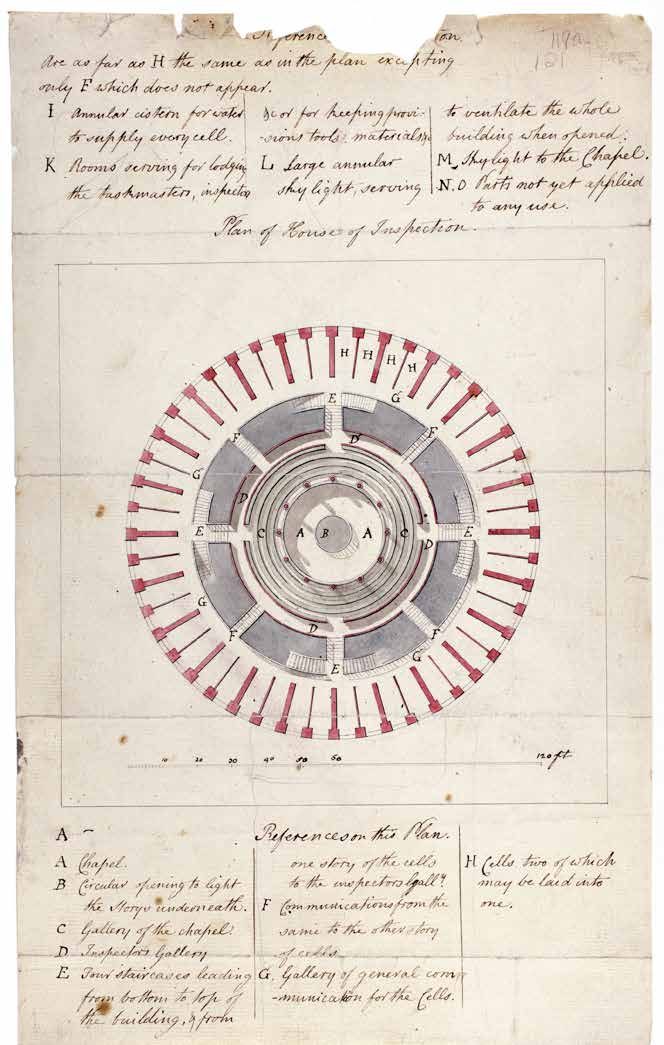
In the 1780s and 1790s, the English philosopher Jeremy Bentham designed the Panopticon (from Greek: “all” + “seeing”), a circular prison where one guard in a central tower can see every cell. The prisoners cannot see the guard: they never know when they are being watched, so they behave as if they were watched all the time.
- Describe the plan: shape, centre, cells.
- Which sentence of the telescreen extract describes exactly the same idea?
- Is a city full of cameras a kind of Panopticon? One argument for, one against.
Doublethink
Winston reads a forbidden book which explains how the Party controls minds:
The Party also has a slogan about history:
George Orwell, Nineteen Eighty-Four (1949), Part Two, chapter 9, and Part One, chapter 3
- Go back to the bell-ringer. How does doublethink explain the three slogans?
- Explain the slogan about the past with an example: if you could change all the school history books tonight, what power would you have tomorrow?
In the slogans, is is weak: /ɪz/, very short. All the energy goes on the two nouns.
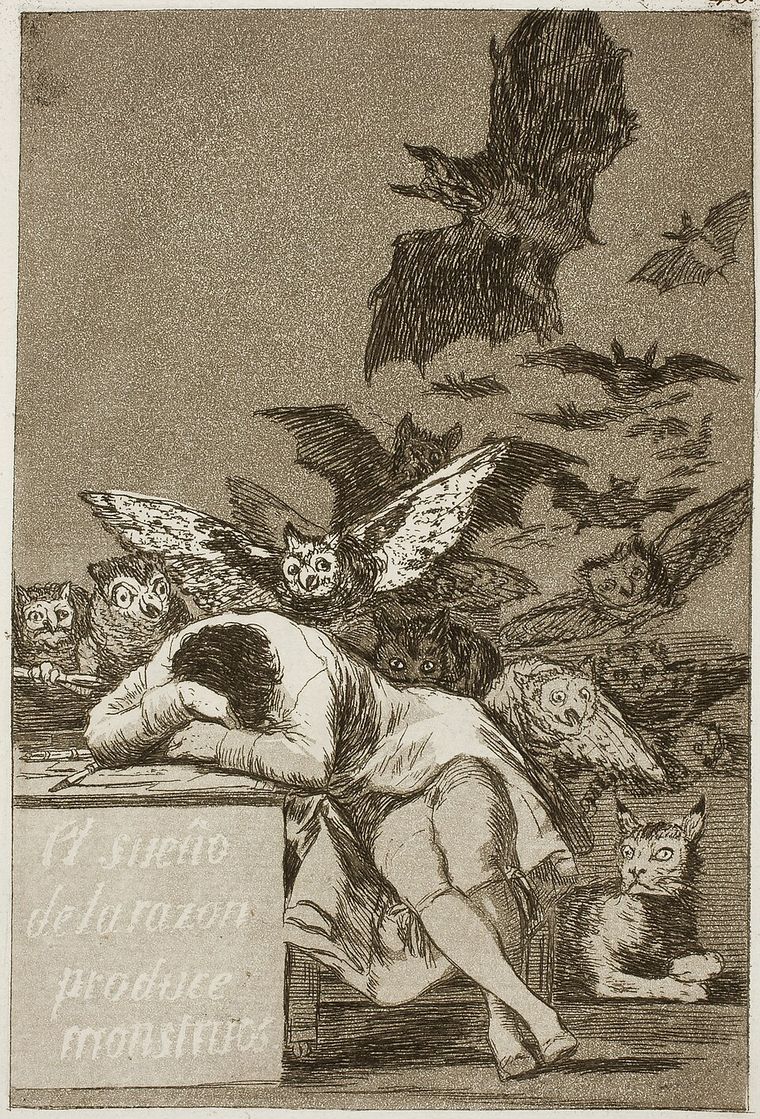
The Spanish painter Goya wrote on this etching: El sueño de la razón produce monstruos, “the sleep of reason produces monsters”. (In Spanish, sueño means both “sleep” and “dream”.)
- Describe the man and the creatures around him. Which animal seems to watch him?
- What happens when reason “sleeps”?
- Link the engraving to doublethink in one sentence.
Radiohead, “2 + 2 = 5” (2003)
Winston writes in his diary: “Freedom is the freedom to say that two plus two make four. If that is granted, all else follows.” At the end of the novel, broken by the Party, he traces “2 + 2 = 5” with his finger in the dust on a table. In 2003, the English band Radiohead opened their album Hail to the Thief with a song called “2 + 2 = 5”. Its chorus asks:
To put the world to rights?”
Radiohead, official channel (live version). Watch it on YouTube.
- Listen to the first minute: how does the music change? Calm, nervous, angry? Find two adjectives.
- “To put the world to rights” means to fix all the problems of the world. Is the singer encouraging the listener, or mocking him? Justify.
- Why is “2 + 2 = 5” a powerful title for a song about politics?
Sources: George Orwell, Nineteen Eighty-Four, Part One, chapter 7; Radiohead, Hail to the Thief (Parlophone, 2003). Two lines quoted for study.
Imagine that a government decides that, from tomorrow, the word bad no longer exists. Work alone.
- How would you say “This film is bad” or “This law is bad”?
- What would you lose? Write two sentences.
Useful: we would have to say… · we couldn’t express… · it would be harder to…
Séance B, entrée en cours. Appel pendant l’écriture. Les élèves inventent souvent « not good » : c’est exactement la solution du roman (« ungood »). On la découvre avec Syme.
Tab 4 · Lesson B · Words taken away
Newspeak: a language that gets smaller every year
Syme, a specialist of Newspeak, explains his work to Winston
Computer voice: George (British English).
A little earlier, Syme explains:
George Orwell, Nineteen Eighty-Four (1949), Part One, chapter 5. Syme also says: “Newspeak is the only language in the world whose vocabulary gets smaller every year.”
Translate into Newspeak
Use only good, un-, plus- and doubleplus-.
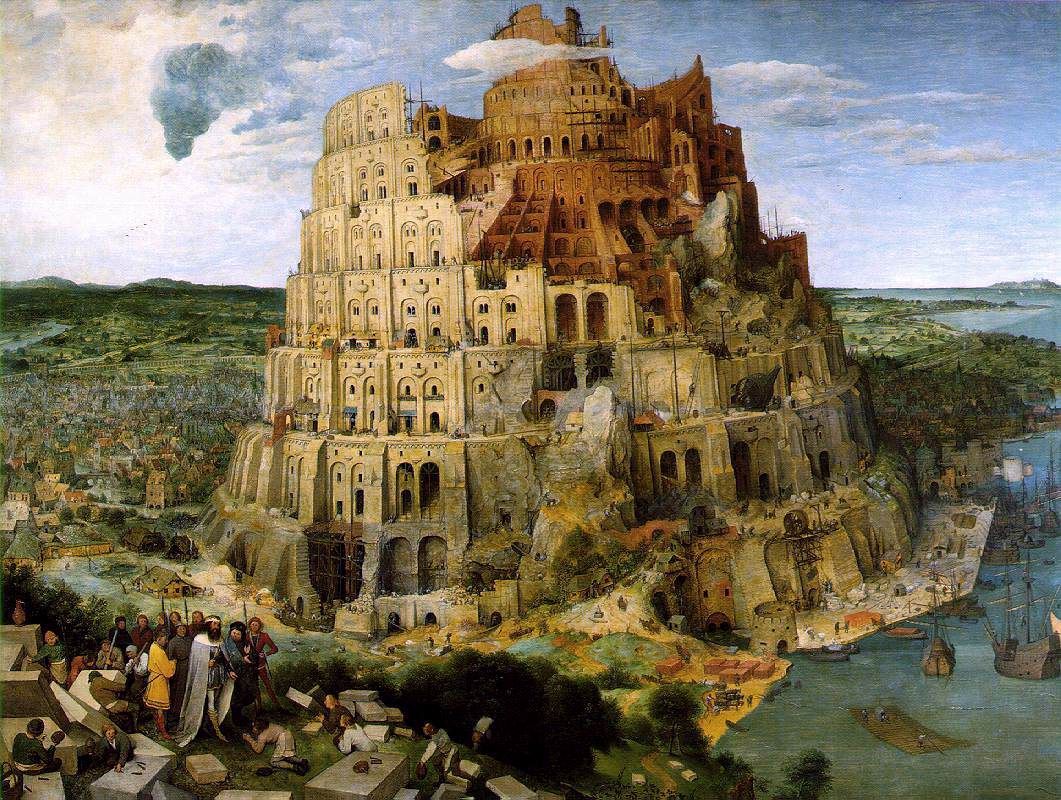
In the Bible story, people build a tower to reach the sky. To stop them, God confuses their language: they can no longer understand one another, and the tower is never finished.
- Describe the tower and the people. What do you notice about the size of the humans?
- Babel: too many languages. Newspeak: one language with fewer and fewer words. Which is more dangerous for freedom? Why?
The real Ministry of Truth
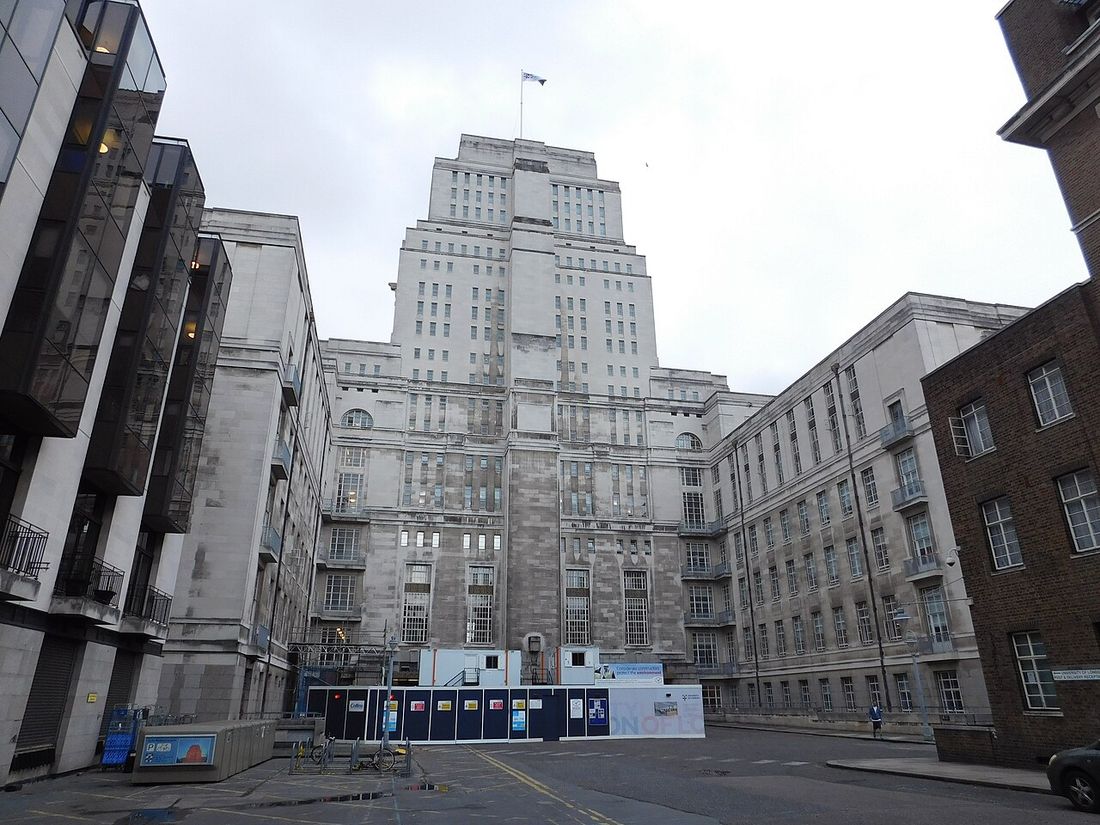
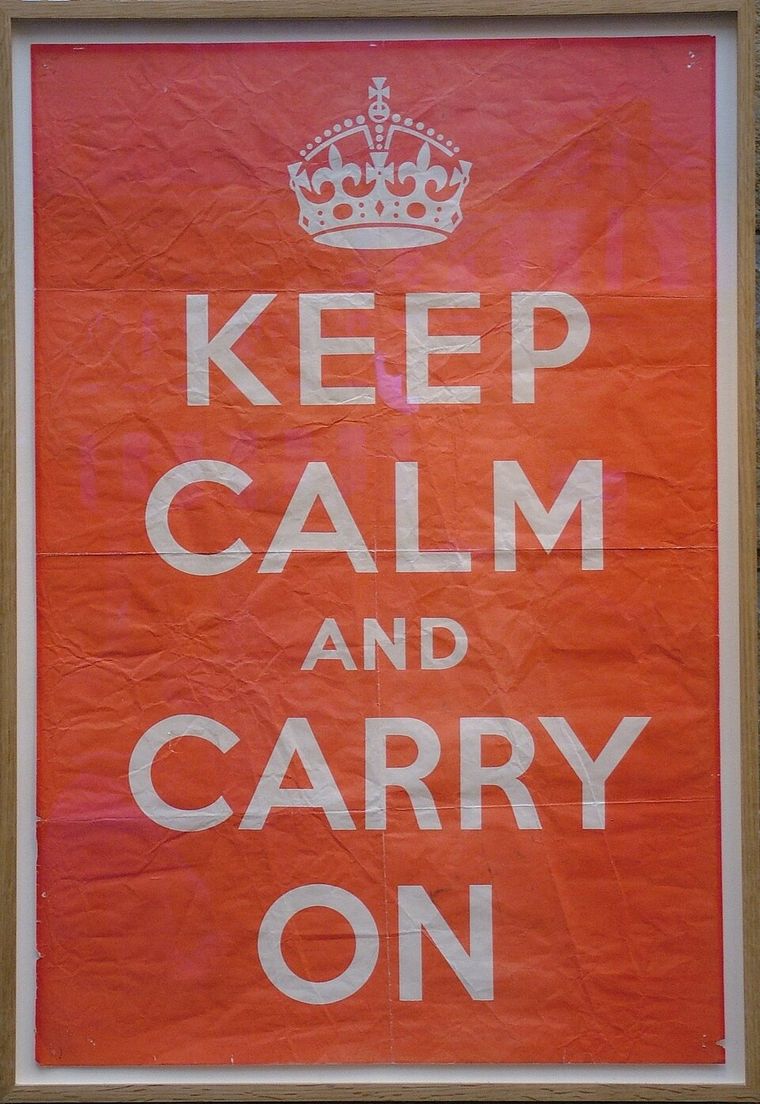
During the Second World War, this tall white building in London was the headquarters of the British Ministry of Information, in charge of propaganda and censorship. Orwell’s wife, Eileen, worked in its Censorship Department. According to the University of London, the building inspired the Ministry of Truth in Nineteen Eighty-Four. The famous “Keep Calm and Carry On” poster was part of a campaign prepared by this ministry in 1939. Most of the posters were never displayed. An original was found in 2000 in a second-hand bookshop, and today the slogan is printed on mugs and T-shirts all over the world.
- Compare the building with Orwell’s description of the Ministry of Truth: “an enormous pyramidal structure […], soaring up, terrace after terrace”, “glittering white” and “startlingly different from any other object in sight”.
- Is “Keep Calm and Carry On” propaganda? Explain in two sentences. Does it become something else on a mug?
Sources: University of London, Senate House history; BBC News, 2019 (Ministry of Information and Nineteen Eighty-Four); George Orwell, Nineteen Eighty-Four, Part One, chapter 1.
Newspeak in real life? Orwell’s warning about political language
In 1946, three years before the novel, Orwell published an essay, Politics and the English Language. He gives this example of political language:
And he concludes that political language “is designed to make lies sound truthful and murder respectable, and to give an appearance of solidity to pure wind.”
- What does “pacification” normally mean? What does it hide here?
- A euphemism is a soft word for a hard reality. Find the reality behind these real expressions: collateral damage (in a war), let go (in a company), passed away.
- Is every euphemism a lie? When is it polite, when is it dangerous?
Source: George Orwell, “Politics and the English Language”, Horizon, 1946 · The Orwell Foundation, full text
Watch: why the novel still matters
BBC News, “George Orwell’s 1984: Why it still matters” (2019, about 5 minutes). If the video does not load: watch it on YouTube. Subtitles are available in the player.
Vidéo BBC News : https://www.youtube.com/watch?v=eFvuzu8vtY8
Watch with a purpose
Group 1: note every word from the novel that you hear (Big Brother, doublethink…). Group 2: note the reasons given for why the novel still matters. Group 3: note the examples from today’s world.
Then share: each group gives its three best notes. Which example from today convinces you most?
Muse, “Resistance” (2009)
In the novel, Winston and Julia fall in love, which is forbidden by the Party. The English band Muse said that their album The Resistance (2009) was inspired by Nineteen Eighty-Four. The chorus of the title song says:
Muse, official video. Watch it on YouTube.
- Why is love dangerous for a totalitarian Party? Think: who do you trust more, the person you love or the government?
- Watch the video: find two images that remind you of the novel (surveillance, secret, escape…).
- Love, art, humour, memory: which one is, for you, the best “resistance”? One sentence.
Speak or write: a dictionary for 2050
Can you think freely about something you have no word for? Think of a feeling you discovered only when you learnt the word for it.
Dans 1984 (1949), Winston Smith vit sous la surveillance permanente du « télécran » et de Big Brother. La double-pensée (doublethink) consiste à accepter en même temps deux croyances contradictoires. La novlangue (Newspeak) supprime des mots pour supprimer des idées : « ungood » remplace « bad ». En 1946, dans Politics and the English Language, Orwell montrait déjà comment les euphémismes politiques cachent la violence. Retiens : dans les slogans, is est faible /ɪz/ et les noms sont accentués.
| Minutes | Séance A (55 min) |
|---|---|
| 0 → 9 | Bell-ringer (les trois slogans), appel, réutilisation. |
| 9 → 20 | Incipit : deux écoutes, quiz, remarque sur « thirteen » et « Victory Mansions », Say it right. |
| 20 → 28 | Le télécran : lecture, questions. |
| 28 → 34 | Panoptique : description, lien avec le télécran, débat flash. |
| 34 → 42 | Double-pensée et slogan sur le passé ; retour au bell-ringer ; Say it right. |
| 42 → 47 | Goya : description guidée et lien avec la double-pensée. |
| 47 → 55 | Radiohead : écoute de la première minute, questions, phrase de Winston répétée en shadowing. |
| Minutes | Séance B (55 min) |
| 0 → 8 | Bell-ringer (le mot « bad » interdit), appel, réutilisation. |
| 8 → 16 | Syme : écoute, lecture, traduction en novlangue. |
| 16 → 21 | Bruegel : description, Babel contre novlangue. |
| 21 → 30 | Real life : Senate House et l’affiche « Keep Calm ». |
| 30 → 37 | Essai de 1946 : « pacification », euphémismes. |
| 37 → 45 | Vidéo BBC en trois groupes d’écoute. |
| 45 → 50 | Muse : clip et questions 1 à 3. |
| 50 → 55 | Lancement de la production à trois paliers (à finir à la maison ou sur l’ENT). |
Moments de bascule
- Début : séance A : slogans en grand au tableau, écrits avant l’entrée. Séance B : question sur le mot « bad », même principe.
- Transitions : chaque extrait est suivi de ses questions déjà affichées ; on passe du texte à l’image (panoptique, Goya, Bruegel) en posant la première question tout de suite, sans présentation longue.
- Fin : A : la phrase de Winston répétée en shadowing, puis rangement. B : consigne de production à trois paliers notée avant de sortir.
- Interclasse : production à finir publiée sur l’ENT pendant que la classe suivante écrit son bell-ringer.
- Si la technique lâche : incipit et extraits lus par vous ; à la place de la vidéo BBC, les trois groupes travaillent sur l’essai de 1946 (une question par groupe) ; les chansons peuvent se faire à partir des paroles citées.
Keeping the room calm · Garder une classe calme
- Tâche de repli : séance A : relever dans l’extrait du télécran trois verbes de surveillance et écrire une phrase sur un objet connecté de sa maison. Séance B : traduire en novlangue cinq adjectifs de son choix.
- Consignes visibles : chaque image (panoptique, Goya, Bruegel) arrive avec ses questions déjà écrites ; on ne présente pas longuement, on fait chercher.
- Recadrer en privé : on se place à côté de l’élève, à voix basse, et on montre la consigne du doigt : « Tu en es où ? Commence par la question 1. » Pas de remarque publique, pas de commentaire sur l’attitude.
- Places et rôles : pour la vidéo BBC, trois groupes d’écoute avec une mission chacun ; un élève qui a du mal à rester assis peut distribuer les fiches ou noter les mots au tableau.
- Si un élève refuse : on ne négocie pas devant la classe et on ne hausse pas le ton : « D’accord, je repasse dans cinq minutes. » On note discrètement, on continue avec les autres, on reprend en tête-à-tête à la fin si besoin. Certains élèves ne joueront pas le jeu ce jour-là : la séance continue quand même.
Sources : George Orwell, Nineteen Eighty-Four, 1949 (incipit, télécran et slogans : I, 1 ; slogan sur le passé : I, 3 ; Syme : I, 5 ; « two plus two make four » : I, 7 ; double-pensée : II, 9) ; « Politics and the English Language », 1946 (The Orwell Foundation) ; University of London et BBC News (Senate House, ministère de l’Information, Eileen Blair au service de la censure) ; Radiohead, Hail to the Thief, 2003 ; Muse, The Resistance, 2009 (album inspiré de 1984, selon le groupe). Charte du cours →
Copy these eight words. Underline the strong syllable. No help, no phone: trust your ear.
dystopia · propaganda · surveillance · totalitarian · authority · democracy · democratic · ideology
Entrée en cours. Mots projetés ou écrits au tableau avant l’entrée ; appel pendant le travail. Réutilisation (minutes 5 à 10) : correction avec les enregistrements de la partie 1 ; chaque élève note son score dans la marge et refera le même test à la fin.
Tab 5 · Phonology and prosody
Pronunciation lab: say it like a slogan
Propaganda works with the voice as much as with words: rhythm, stress, short sentences that stay in your head. Today you train like actors: listen, imitate, record yourself, improve. Nobody needs a perfect accent; the aim is to be understood easily and to sound sure of yourself.
The words of the theme
Listen to each word once, repeat it three times. Then check your bell-ringer.
| Word | Family |
|---|---|
| stress on the third syllable: pro-pa-GAN-da | |
| /səˈveɪləns/ · the first syllable is weak | |
| just before -ian · | |
| just before -ity | |
| · just before -ic | |
| (noun) | (verb) · same stress, last vowel /i/ → /aɪ/ |
Apply the rules
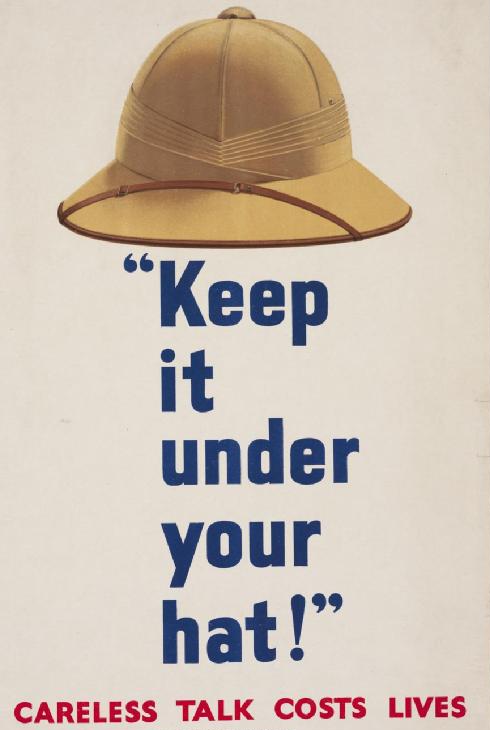
During the Second World War, the British government warned people not to talk about soldiers, ships or factories: a spy could be listening. Slogans had to be short and easy to remember, with a strong rhythm.
- Count the strong beats in each slogan. What do you notice?
- Which sounds are repeated in “Careless talk costs lives”? Why does it help memory?
- Describe the man on the poster. Why is he smiling?
Weak forms: the little words almost disappear
Grammar words (was, can, for, to) are usually weak: the vowel becomes /ə/. They become strong only when they are alone, stressed or negative.
The difference between can and can’t is mostly the vowel: short /ə/ for can, long /ɑː/ for can’t. Your listener needs it to understand you!
Intonation: statement or question?
The same words can be a fact or a worry. Listen: the voice goes down for a statement and up for a surprised question.
With a question tag, a falling voice asks for agreement. The title of a 1935 American novel by Sinclair Lewis, It Can’t Happen Here, became a famous warning:
Pair work: A says one sentence, with a falling or rising voice. B answers “That’s a fact” or “Are you surprised?”.
Tongue-twisters on the theme
Choose your challenge. B1: the slow version, three times. B1+: the normal version, three times without a mistake. B2: from memory, then record yourself on your phone and compare.
Shadowing: the lines you already know
Slow version twice, normal version twice, then alone, eyes up.
Pair work: the pronunciation coach
Student A reads Part 2 and two tongue-twisters. Student B listens with this checklist, then you swap.
| Criterion | Yes | Not yet |
|---|---|---|
| Stress in the right place in surveillance, propaganda, democratic | ||
| Weak was, can, for, to; clear long vowel in can’t | ||
| /θ/ in thirteen, thin, thick: tongue between the teeth | ||
| Voice goes down for a statement, up for a surprised question | ||
| Clear voice, eyes up, steady rhythm |
Why are slogans, chants and advertising jingles so easy to remember? Think of one you cannot get out of your head. Who wrote it, and what did they want from you?
Retiens : avec -ian, -ity, -ic, -ical, l’accent tombe juste avant le suffixe ; surveillance se dit /səˈveɪləns/. Les petits mots grammaticaux (was, can, for, to) sont faibles, avec le son /ə/ ; can’t garde une voyelle longue. La voix descend pour une affirmation et monte pour une question surprise. Les slogans de propagande jouent sur le rythme et la répétition des sons.
| Minutes | Déroulement (55 min) |
|---|---|
| 0 → 5 | Bell-ringer affiché avant l’entrée, appel pendant le travail. |
| 5 → 13 | Partie 1 : correction avec les enregistrements, chaque élève note son score ; quiz. |
| 13 → 20 | Affiches : temps forts comptés, slogans scandés en chœur. |
| 20 → 28 | Partie 2 : formes faibles, répétition chorale puis par rangée. |
| 28 → 34 | Partie 3 : intonation, jeu en binômes. |
| 34 → 42 | Partie 4 : virelangues, chacun choisit son défi. |
| 42 → 47 | Partie 5 : shadowing. |
| 47 → 53 | Binômes « pronunciation coach » avec la grille. |
| 53 → 55 | Même test qu’au bell-ringer : chacun compare ses deux scores. |
Moments de bascule
- Début : les huit mots sont au tableau avant l’entrée ; le test se fait seul et en silence, ce qui pose la classe.
- Transitions : la séance alterne écoute et voix toutes les cinq à huit minutes ; on passe d’une partie à l’autre en lançant directement le premier enregistrement, sans commentaire.
- Fin : le second test (même liste) donne à chacun un résultat visible ; on range après avoir noté le score.
- Interclasse : pendant que vous remplissez PRONOTE, la classe suivante trouve son bell-ringer affiché ; les élèves qui sortent peuvent refaire le quiz sur leur téléphone (lien ENT).
- Si la technique lâche : vous servez de modèle pour chaque phrase (une fois normalement, une fois lentement) ; les accents sont soulignés en rouge sur la fiche papier ; les virelangues se font en relais par rangée.
Keeping the room calm · Garder une classe calme
- Tâche de repli : écrire les huit mots du bell-ringer, souligner la syllabe accentuée à l’aide des enregistrements sur son téléphone, avec écouteurs, puis classer les mots par suffixe.
- Consignes visibles : chaque partie commence par un enregistrement : la consigne est la même (écouter, répéter trois fois), donc rien à réexpliquer.
- Recadrer en privé : répéter en chœur protège : personne n’est seul à parler. Pour un élève gêné, on propose de répéter à voix basse avec son voisin ; on ne fait jamais répéter seul un élève qui ne le souhaite pas.
- Places et rôles : les binômes « coach » sont formés à l’avance ; le coach coche la grille, ce qui donne un rôle actif à un élève qui n’aime pas parler.
- Si un élève refuse : on ne négocie pas devant la classe et on ne hausse pas le ton : « D’accord, je repasse dans cinq minutes. » On note discrètement, on continue avec les autres, on reprend en tête-à-tête à la fin si besoin. Certains élèves ne joueront pas le jeu ce jour-là : la séance continue quand même.
Repères du programme (BO n° 22 du 29 mai 2025, terminale) : schémas intonatifs, accentuation du mot selon sa composition, formes faibles. Voie professionnelle : « l’entraînement à la prise de parole demande un travail spécifique et régulier en vue de l’amélioration de la prononciation » (programme de 2019). On reprend les erreurs tout de suite, sans bloquer la prise de parole. It Can’t Happen Here, roman de Sinclair Lewis (1935), figurait dans les meilleures ventes d’Amazon en janvier 2017 (AP, 24 janvier 2017, onglet 6). Charte du cours →
“Alternative facts”
Work alone, in your notebook.
- What is a fact? Write a definition in one sentence.
- Can a fact have an “alternative”? Explain in one or two sentences.
- Write one fact and one opinion about your school.
Useful: a fact is something that… · it can be checked / proved · an opinion is what someone thinks…
Entrée en cours. Appel pendant l’écriture. Réutilisation (minutes 5 à 9) : deux définitions lues, la meilleure notée au tableau ; trois paires fait / opinion, la classe vote. On garde la définition au tableau pour toute la séance. Cet onglet occupe deux séances (A : lire un article de presse ; B : vérifier les sources).
Tab 6 · Lesson A · The press
Read the news: when a 1949 novel tops the charts
In January 2017, sixty-eight years after it was published, Nineteen Eighty-Four became the best-selling book on Amazon in the United States. Why? Today you read the news like a journalist: who said what, when, and how do we know?
What happened in January 2017
Computer voice: Michael (American English).
Transcript (only after the two listenings)
On Sunday the twenty-second of January 2017, two days after Donald Trump became president, his adviser Kellyanne Conway appeared on the NBC programme Meet the Press. The presenter, Chuck Todd, asked her why the White House press secretary had made false statements about the size of the crowd at the inauguration. She answered that he had given alternative facts. Chuck Todd replied that alternative facts are not facts: they are falsehoods. Two days later, George Orwell’s Nineteen Eighty-Four was number one on Amazon’s best-seller list, and its publisher, Penguin, ordered a reprint of seventy-five thousand copies.
Who, what, when?
Watch the original interview
NBC News, official channel, Meet the Press, 22 January 2017. If the video does not load: watch it on YouTube. Turn on the English subtitles.
Vidéo NBC News : https://www.youtube.com/watch?v=VSrEEDQgFc8
Watch like a fact-checker
- Find the exact moment when Kellyanne Conway says “alternative facts”. Write down the sentence.
- How does Chuck Todd react? Describe his face and his voice.
- Body language: who interrupts whom? Who stays calm?
Anatomy of a news story
‘1984’ sales soar after Trump claims, ‘alternative facts’
NEW YORK (AP) → After incorrect or unprovable statements made by Republican President Donald Trump and some White House aides, one truth is undeniable: Sales of George Orwell’s “1984” are soaring.
First published in 1949, Orwell’s classic dystopian tale of a society in which facts are distorted and suppressed in a cloud of “newspeak” topped the best-seller list of Amazon.com as of Tuesday evening. The sales bump comes after the Trump administration’s assertions his inauguration had record attendance and his unfounded allegation that millions of illegal votes were cast against him last fall.
Trump adviser Kellyanne Conway coined an instant catchphrase Sunday when she called his claims about crowd size “alternative facts,” bringing comparisons on social media to “1984.”
Orwell’s book isn’t the only cautionary tale on the Amazon list. Sinclair Lewis’ 1935 novel about the election of an authoritarian president, “It Can’t Happen Here,” was at No. 46. Aldous Huxley’s “Brave New World” was at No. 71.
The Associated Press, 24 January 2017, first four paragraphs, quoted for study · apnews.com
Find the parts of the article
Five real headlines from the same week
Listen and repeat. Then find the rules of “headlinese”.
The rules of headlines
A friend sends you this message: “Look!!! A study proves that teenagers who sleep with their phone have lower grades!!!” Work alone.
- Write three questions you would ask before you believe it or share it.
- Where could you check it in less than two minutes?
Useful: Who…? · Where does it come from? · When was it…? · Is there another source that…?
Séance B, entrée en cours. Appel pendant l’écriture. Message inventé pour l’exercice (aucune étude citée). On recueille les questions des élèves et on les range en quatre familles, qui deviennent la méthode ci-dessous.
Tab 6 · Lesson B · Check before you share
Four sources, one story: who said it first?
Four questions before you share
| Question | What you check |
|---|---|
| Who? | Who wrote it? A news agency, a newspaper, an anonymous account? |
| When? | The date and even the time: news changes from hour to hour. |
| Where from? | Who gave the information first? Can you find the original? |
| Who else? | Do other reliable sources say the same thing? |
Investigation: compare the sources
| Source | What it says |
|---|---|
| The Guardian, 24 Jan. (Tuesday) | “As of Tuesday, the book was the sixth best-selling book on Amazon.” |
| AP, 24 Jan. (Tuesday evening) | The book “topped the best-seller list of Amazon.com as of Tuesday evening”. |
| CNNMoney, 25 Jan. | “We put through a 75,000 copy reprint this week,” a Penguin spokesman told CNNMoney on Tuesday evening. According to Nielsen BookScan, the book sold 47,000 print copies in the United States since Election Day, up from 36,000 over the same period the year before. |
| AP, 25 Jan. | The publisher, Signet Classics, “has ordered an additional 75,000 copies”. |
| The Independent, 27 Jan. | The book has “sold out on Amazon in the US”; Nielsen BookScan figures: 47,000 copies, up from 36,000, “an increase of 30 per cent”. |
| BBC News, 29 Jan. | Sales increased by 9,500% since the inauguration, according to Signet Classics; “in the first three weeks of January sales increased by 20% in the UK”; “the book has never been out of print since it was published in 1948”. |
- The Guardian says “sixth”, AP says “first”, on the same day. Is one of them wrong? Explain.
- Penguin or Signet Classics: is it the same publisher? (Clue: Signet Classics is an imprint, a brand, of Penguin.)
- Who gave the 47,000 figure first? Which newspaper probably took it from another?
- One of these sources contains a factual error about the novel. Find it and correct it.
Sources: The Guardian, 24 Jan. 2017 · AP, 24 Jan. 2017 · CNNMoney, B. Stelter and F. Pallotta, 25 Jan. 2017 · AP, 25 Jan. 2017 (republished by The Columbian) · Charlotte England, The Independent, 27 Jan. 2017 · Brian Wheeler, BBC News, 29 Jan. 2017
When a news agency corrects itself
The first version of the AP article of 25 January quoted Kellyanne Conway as saying “alternate facts”. She had said “alternative facts”. AP corrected the article and added a short note at the end: “Corrects from alternate to alternative.”
- Why does a news agency publish a correction, even for one word?
- Does a correction make you trust AP more or less? Explain.
- On social media, how often do people correct what they share? What could change that?
Practise the five headlines again, like a news presenter: clear voice, short pause after each group of words.
Speak or write: be the journalist
Why do you think people rushed to buy a novel from 1949 when they heard the words “alternative facts”? What can a novel give that a news article cannot?
En janvier 2017, après l’expression « faits alternatifs » employée par une conseillère de Donald Trump, 1984 devient le livre le plus vendu sur Amazon aux États-Unis ; l’éditeur réimprime 75 000 exemplaires. Une dépêche d’agence commence par le lieu (dateline) et un premier paragraphe qui résume l’essentiel (lead). Les titres de presse utilisent le présent simple, suppriment les articles et l’auxiliaire. Avant de partager une information : qui, quand, d’où vient-elle, qui d’autre la confirme ?
| Minutes | Séance A (55 min) |
|---|---|
| 0 → 9 | Bell-ringer (fait / opinion), appel, réutilisation. |
| 9 → 18 | Écoute deux fois, quiz. |
| 18 → 26 | Vidéo NBC (extrait), tâche « Watch like a fact-checker ». |
| 26 → 40 | Dépêche AP : lecture silencieuse, puis repérage des parties, remarque sur le choix des mots. |
| 40 → 52 | Cinq titres : écoute, répétition, règles du titre de presse. |
| 52 → 55 | Ticket de sortie : transformer une phrase du jour en titre de presse. |
| Minutes | Séance B (55 min) |
| 0 → 9 | Bell-ringer (message à vérifier), appel, quatre familles de questions. |
| 9 → 30 | Enquête sur les six sources en groupes de trois : chaque groupe traite deux questions, mise en commun. |
| 30 → 38 | Real life : la correction d’AP. |
| 38 → 43 | Say it right, titres lus comme un présentateur. |
| 43 → 55 | Production à trois paliers, commencée en classe, à finir sur l’ENT. |
Moments de bascule
- Début : l’expression « alternative facts » écrite en grand avant l’entrée ; elle intrigue, les élèves se mettent à écrire.
- Transitions : la vidéo est chargée et calée au bon moment avant la séance ; la dépêche est sur la fiche papier, chacun la lit en silence pendant que vous ouvrez l’activité suivante.
- Fin : séance A, ticket de sortie (un titre de presse) ; séance B, la consigne de production est notée avant de ranger.
- Interclasse : la production à trois paliers se publie sur l’ENT pendant le bell-ringer de la classe suivante.
- Si la technique lâche : vous lisez la transcription ; à la place de la vidéo, deux élèves lisent l’échange Conway / Todd (deux répliques au tableau) ; l’enquête sur les sources se fait entièrement sur papier.
Keeping the room calm · Garder une classe calme
- Tâche de repli : recopier les cinq titres et écrire, pour chacun, la phrase complète (avec the, is, le prétérit). Seul, sans écran.
- Consignes visibles : les quatre questions de la méthode restent affichées pendant toute la séance B.
- Recadrer en privé : on se place à côté de l’élève, à voix basse, et on montre la consigne : « Tu en es où ? Commence par la source 1. » Pas de remarque publique.
- Places et rôles : dans les groupes de trois, un lecteur, un secrétaire, un porte-parole ; un élève qui décroche peut devenir « vérificateur » (il cherche la date de chaque source).
- Sujet politique : on étudie la manière dont l’information circule, pas les opinions politiques ; si un élève veut débattre de Donald Trump, on note sa question pour l’onglet 7 et on revient aux sources.
- Si un élève refuse : on ne négocie pas devant la classe et on ne hausse pas le ton : « D’accord, je repasse dans cinq minutes. » On note discrètement, on continue avec les autres, on reprend en tête-à-tête à la fin si besoin.
Sources : AP, 24 janvier 2017 (dépêche citée, publiée à 18 h 42, heure du Pacifique) et 25 janvier 2017 (Signet Classics, 75 000 exemplaires, note de correction « Corrects from alternate to alternative ») ; CNNMoney, 25 janvier 2017 (porte-parole de Penguin, chiffres Nielsen BookScan) ; The Guardian, 24 janvier 2017 ; The Independent, 27 janvier 2017 ; BBC News, 29 janvier 2017 (erreur « published in 1948 ») ; NBC, Meet the Press, 22 janvier 2017 (« Alternative facts are not facts. They’re falsehoods. »). Charte du cours →
Compare these two sentences. Work alone.
A. I broke the window. · B. The window was broken.
- In which sentence do we know who did it?
- You are 8 years old and your mother asks what happened. Which sentence would you choose? Why?
- Write another pair of sentences like A and B about your school or your workplace.
Entrée en cours. Appel pendant l’écriture. Réutilisation (minutes 5 à 9) : la question 2 fait toujours sourire ; elle installe l’idée centrale de la séance : le passif permet de cacher l’auteur d’une action. Deux paires d’élèves au tableau. Cet onglet occupe deux séances (A : le passif, leçon 1 ; B : le passif, leçon 2, puis le débat).
Tab 7 · Lesson A · Grammar in context
“Mistakes were made”: the grammar of hiding
In 1946, in his essay Politics and the English Language, Orwell gave six rules for clear writing. Rule number iv says:
Why? Because the passive can make the person responsible disappear. Today you learn to use the passive well, and to spot when it is used to hide something.
A president explains a scandal
In November 1986, Americans learnt that their government had secretly sold weapons to Iran. This became known as the Iran-Contra affair. On 27 January 1987, President Ronald Reagan spoke to Congress:
A few sentences later:
Full sentence: “But we did not achieve what we wished, and serious mistakes were made in trying to do so.” · Ronald Reagan Presidential Library, full text of the speech
- In the first extract, find the subject of each verb. Who is responsible?
- In “Serious mistakes were made”, who made the mistakes? Does the sentence say?
- Why do you think “mistakes were made” became a famous expression for an apology that is not really an apology?
How to build the passive
| Active | Passive: be (in the right tense) + past participle |
|---|---|
| The CIA paid for the film. | The film was paid for (by the CIA). |
| The Party rewrites the past. | The past is rewritten. |
| Cameras are watching us. | We are being watched. |
| Someone has changed the ending. | The ending has been changed. |
| The police will scan your face. | Your face will be scanned. |
| We must check every source. | Every source must be checked. |
When is the passive useful? When we don’t know who did it (My bike was stolen), when it is obvious or not important (The book was published in 1945), in news headlines and in science. When is it suspicious? When someone knows who did it and prefers not to say.
The passive in Nineteen Eighty-Four
Winston explains what happens to people arrested by the Thought Police:
George Orwell, Nineteen Eighty-Four (1949), Part One, chapter 1
- Underline the four passive verbs.
- Who removes, wipes out, denies? Why does Orwell never say it?
Weak forms in the passive
was /wəz/, were /wə/, been /bɪn/ are weak. The stress goes on the past participle.
Gap-fill worksheet: three steps
Do it on screen or on the gap-fill worksheet (paper or ENT). Start with the step you feel sure about, then try the next one.
Present simple and past simple passive
Put the verb in brackets in the passive.
All tenses and modals
Rewrite in the passive, without the agent
Rage Against the Machine, “Testify” (1999)
The American band Rage Against the Machine ends this song with two lines taken from the Party slogan of Nineteen Eighty-Four:
Who controls the present now controls the past”
Official video (RATMVEVO). Watch it on YouTube. The video uses news images; teachers may preview it.
- Compare with Orwell’s slogan (tab 4). Which word did the band add? What does it change?
- Rewrite the slogan in the passive: “The future … by those who …”.
- Why would a band in 1999 quote a novel from 1949?
Rewrite these signs in the active. Who is the hidden agent? Work alone.
- CCTV is in operation on these premises.
- Customers are requested to show their bags at the exit.
- This call may be recorded for training purposes.
Have you seen signs like these at your workplace, in a shop or at the station?
Séance B, entrée en cours. Appel pendant l’écriture. Les élèves de voie professionnelle reconnaissent souvent ces panneaux de leur lieu de stage : on les laisse en parler, c’est le lien direct avec le débat.
Tab 7 · Lesson B · Grammar lesson 2 and debate
Lesson 2: the passive to report, to warn, to protect
| Structure | Example | Use |
|---|---|---|
| It is said / believed / reported that… | It is reported that 1,700 arrests were made. | news, prudence |
| Subject + is said to + infinitive | Room 101 is said to have been named after a BBC room. | information not fully confirmed |
| Modal + be + past participle | Every source must be checked before it is shared. | rules, advice |
| be being + past participle | Are we being watched? | an action in progress |
| get + past participle (spoken) | He got arrested. | informal, often something bad |
The debate: live facial recognition in our streets?
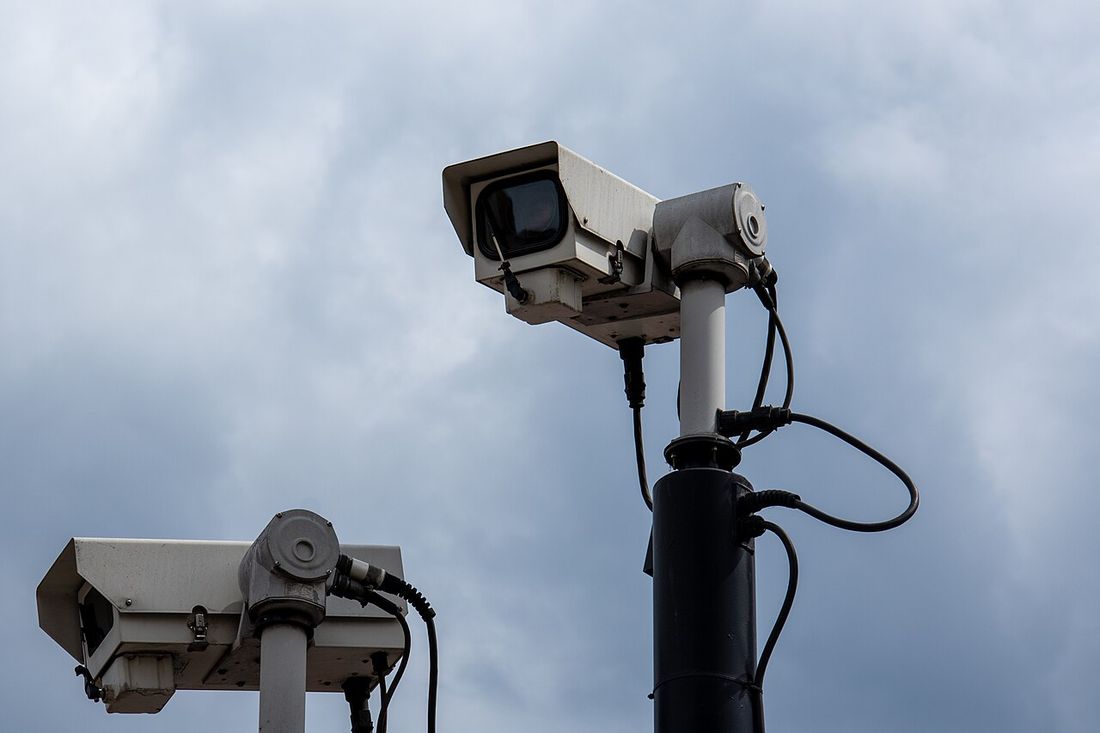
On 26 January 2026, the British government announced that the number of live facial recognition vans available to the police would rise from 10 to 50, for all forces in England and Wales. The cameras compare the faces of passers-by with a police watchlist.
The Home Secretary, Shabana Mahmood, told the BBC: “I make no apology for rolling out this technology.” She said the Metropolitan Police had made 1,700 arrests thanks to it, and rejected the idea of a “Big Brother” society. Civil liberties campaigners, such as the group Liberty, warned that the technology could wrongly identify people, and that black people were more at risk.
Sources: BBC News, “Mahmood defends rollout of facial recognition to all police forces”, 27 January 2026 · BBC News, 26 January 2026
A model debate
Computer voices: George (chair), Michael (shop manager), Heart (campaigner), Emma (student). Roles invented for the model; the facts come from BBC News, 27 January 2026.
Transcript
Chair: Good evening, everyone. Tonight’s question is simple: should the police be allowed to use live facial recognition in our streets? In January 2026, the British government announced that the number of live facial recognition vans would rise from ten to fifty. Let’s hear our first speakers.
Shop manager: I’m a shop manager, and I support it. The Home Secretary said that the Metropolitan Police had made one thousand seven hundred arrests thanks to this technology. If dangerous people are caught, everybody is safer.
Campaigner: With respect, safety is not the only value. Campaigners say that these systems make mistakes, and that black people are more likely to be wrongly identified. If you are wrongly identified, who will protect you?
Student: I can see both sides. But I’d like to know who watches the watchers. Who decides which faces are put on a watchlist?
Chair: That’s a fair question. So, what safeguards would you ask for?
Who says what?
Roles and rules
| Role | Your mission |
|---|---|
| The chair (1) | Opens, gives the floor, keeps time (1 minute per speaker), closes with a summary. |
| For (3 or 4) | Police officer, shop manager, parent of a missing child, Home Office spokesperson. |
| Against (3 or 4) | Civil liberties campaigner, lawyer, citizen wrongly identified, journalist. |
| Fact-checkers (2) | Note every figure said and check it against the BBC article. They speak last. |
| The audience | Each student notes one argument for, one against, and one passive sentence heard. Final vote. |
Rules: you defend your role, not necessarily your opinion. You attack ideas, never people. Every figure must come from the sources. Use at least one passive sentence and one debate phrase.
Speak or write: after the debate
Think of a sign, an email or a rule at school or at work written in the passive. Who is the hidden agent? Would the message be different in the active?
Le passif se forme avec be au temps voulu + participe passé : The film was paid for by the CIA. Il sert quand on ne connaît pas l’auteur de l’action ou qu’il n’importe pas, mais il peut aussi servir à le cacher : « Serious mistakes were made » (Reagan, 1987). Orwell conseillait : « N’utilisez jamais le passif quand vous pouvez utiliser l’actif. » Structures utiles : It is said that…, He is said to…, must be checked, are being watched. Dans un débat, on défend un rôle, on attaque des idées, jamais des personnes.
| Minutes | Séance A (55 min) |
|---|---|
| 0 → 9 | Bell-ringer (la vitre cassée), appel, réutilisation. |
| 9 → 18 | Règle d’Orwell, puis Reagan : écoute des deux extraits, questions 1 à 3. |
| 18 → 26 | Leçon 1 : formation, lecture du tableau, usages. |
| 26 → 32 | Extrait de 1984, Say it right (formes faibles). |
| 32 → 50 | Fiche à trous à trois paliers (papier ou ENT) : chacun démarre au palier où il se sent sûr ; correction intégrée (bouton Check ou corrigé projeté par palier). |
| 50 → 55 | RATM : écoute de la fin du morceau, questions 1 et 2. |
| Minutes | Séance B (55 min) |
| 0 → 8 | Bell-ringer (panneaux), appel, réutilisation. |
| 8 → 16 | Leçon 2 : tableau des structures, deux phrases en shadowing. |
| 16 → 24 | Real life (BBC, janvier 2026), débat modèle : écoute et quiz. |
| 24 → 30 | Expressions de débat, distribution des rôles (cartes préparées), 3 minutes de préparation. |
| 30 → 50 | Débat : une minute par intervenant, vérificateurs, vote. |
| 50 → 55 | Bilan : un argument retenu par chacun ; consigne de production. |
Moments de bascule
- Début : les deux phrases de la vitre (séance A) ou les trois panneaux (séance B) sont affichés avant l’entrée.
- Transitions : la fiche à trous est distribuée pendant l’écoute de Reagan, face cachée ; on la retourne dès la fin de la leçon 1. Les cartes de rôle du débat sont préparées à l’avance et posées sur les tables pendant le quiz.
- Fin : le chair résume, la classe vote à main levée, chacun écrit un argument retenu : la séance se termine sur un geste simple et collectif.
- Interclasse : la fiche à trous et son corrigé se publient sur l’ENT pendant que la classe suivante commence son bell-ringer.
- Si la technique lâche : vous lisez les deux phrases de Reagan et le débat modèle avec trois élèves (texte sur la fiche) ; corrigé des paliers sur papier ; pas de clip RATM : on travaille les deux lignes citées.
Keeping the room calm · Garder une classe calme
- Tâche de repli : transformer à l’actif les trois panneaux du bell-ringer B, puis écrire deux panneaux de son lieu de stage ou de son lycée au passif.
- Consignes visibles : chaque palier a sa consigne et son corrigé ; l’élève avance à son rythme sans attendre.
- Recadrer en privé : on se place à côté de l’élève, à voix basse : « Choisis le palier 1, fais les trois premières phrases, je reviens. » Pas de remarque publique.
- Places et rôles : les rôles du débat sont attribués à l’avance, avec une carte qui contient deux arguments rédigés : personne ne se retrouve sans rien à dire. Un élève réticent à parler peut être vérificateur ou gardien du temps.
- Débat apaisé : on défend un rôle, pas son opinion ; une minute chacun, le chair coupe poliment. Si le ton monte, vous reprenez la parole calmement : « Let’s look at the facts », puis vous donnez la parole au vérificateur.
- Si un élève refuse : pas de négociation devant la classe : « D’accord, tu prends des notes pour le vote. » On note discrètement et on continue.
Sources : George Orwell, « Politics and the English Language », 1946, règle iv (The Orwell Foundation) ; Ronald Reagan, discours sur l’état de l’Union, 27 janvier 1987 (Reagan Library) ; George Orwell, Nineteen Eighty-Four, I, 1 ; Rage Against the Machine, « Testify », album The Battle of Los Angeles, 1999 ; BBC News, 26 et 27 janvier 2026 (10 à 50 camionnettes, citation de Shabana Mahmood, 1 700 arrestations selon la Met, mises en garde de Liberty). Liens avec les programmes : axe « Fictions et réalités » ; voie professionnelle, « la lutte contre la manipulation de l’information ». Charte du cours →
Copy the six criteria. Tick the ones you are ready for. Circle the one you will work on today.
- I can explain a real trend of 2026 with a source and a date.
- I can open a story with a strange detail, like Orwell’s clocks striking thirteen.
- I use the passive to show a power that hides (tab 7).
- I use past tenses to tell a story, and will / could / might to warn.
- I stress the right syllables and use weak forms (tab 5).
- I speak from key words, not from a written text.
Entrée en cours. Critères affichés avant l’entrée ; appel pendant le travail. Réutilisation : chacun annonce le critère entouré ; pendant le travail, vous passez en priorité sur ce critère.
Tab 8 · Final task
Final task: a warning from 2050
Part 1: the opening page
Alone or in pairs, write the first page of your novel. Your world must grow from a real trend of today, which you name and date in a short note under your title (source, date).
| Step | Length |
|---|---|
| B1 | 150 to 180 words |
| B1+ | 180 to 220 words |
| B2 | 220 to 280 words, with a dialogue or an official text inserted (a sign, a law, a slogan) |
Part 2: the warning speech
Present your world in about 5 minutes: the real trend, how it became your 2050 dystopia, and what we should do today so that it never happens. Then answer questions for up to 5 minutes. You may use a plan and key words, not a written text.
Voie professionnelle : training for situation B of the bac pro exam (up to 5 minutes of continuous speech, then up to 5 minutes of interaction). Voie générale et technologique : training to speak at length, argue and react to questions, at the level expected in Terminale (B1 in LVB, B2 in LVA).
Start from reality: two trends of 2026
Faces in the street
In January 2026, the British government announced that the number of live facial recognition vans available to the police would rise from 10 to 50, for all forces in England and Wales (tab 7).
Source: BBC News, 27 January 2026
No social media under 16
Since 10 December 2025, Australian law has set a minimum age of 16 for having an account on major social media platforms. In January 2026, the Australian government announced that 4.7 million accounts had been deactivated, removed or restricted.
Source: Prime Minister of Australia, media release, 16 January 2026
You can also choose another trend, as long as you find it in a reliable source and write down the source and the date. Ask yourself: what if this went too far? A dystopia is not a prediction; it is a warning that makes the present look different.
David Bowie, “1984” (1974): when the answer is no, invent your own world
In 1973 and 1974, David Bowie worked on a musical based on Nineteen Eighty-Four. Orwell’s widow, Sonia, refused to give him the rights. So Bowie created his own dystopia, the album Diamond Dogs (1974), and kept two songs from the project: “1984” and “Big Brother”.
David Bowie, “1984” (2016 Remaster), official audio (Parlophone). Listen on YouTube.
- Listen to the first minute. Does the music sound like a warning, a party, or both? Find two adjectives.
- Bowie could not use Orwell’s world, so he invented his own. What does that teach you for your final task?
Sources: Victoria and Albert Museum, David Bowie Is (2013); The Guardian; The Orwell Society.
How to open a dystopia
| Technique | In Nineteen Eighty-Four | Your turn |
|---|---|---|
| A normal scene with one strange detail | “a bright cold day in April, and the clocks were striking thirteen” | An ordinary morning… but something is wrong. |
| A character in movement | Winston slips through the glass doors | Your character goes somewhere: school, work, the station. |
| A name that lies | Victory Mansions smells of boiled cabbage | A “Happiness Centre”, a “Freedom Card”… |
| A sign of control | the poster: BIG BROTHER IS WATCHING YOU | A sign, a screen, an app, a slogan. |
| A power without a face | the passive: “Your name was removed from the registers” | Use the passive: Every face is scanned… |
The Faces Act (Trend: live facial recognition vans, United Kingdom, BBC News, 27 January 2026)
It was a grey Monday in March 2050, and every lamp post in Leeds was smiling. Maya noticed it as she stepped out of the bus: the old cameras had been replaced during the night by small white faces with friendly eyes. A screen above the station read: SMILE, YOU ARE SAFE.
At the gate of the Freedom College, the queue was moving slowly. Each student looked up, the white face blinked, and the gate opened. Maya’s brother had been stopped there the year before. Nobody had told him why. His name was simply removed from the list of students, and his messages were never answered.
When her turn came, Maya looked up. The face blinked once, twice. A soft voice said, “Please wait. Your file is being checked.” Behind her, the queue went silent. Nobody looked at her. Nobody wanted to be seen looking.
Then the gate opened, and the screen smiled again.
Find in the model: the strange detail, the lying names, the sign of control, three passive verbs, and the sentence that shows fear without saying the word “fear”.
A model warning speech (about two minutes)
Computer voice: Emma (British English).
Transcript
Good morning. Imagine a city in 2050. Every street corner has a camera, and every face is scanned and compared with a list. Nobody knows who is on the list, or why. Is this science fiction? Not entirely. In January 2026, the British government announced that the number of live facial recognition vans would rise from ten to fifty. The Home Secretary said the technology had helped the police make many arrests. But campaigners warned that people can be wrongly identified. Nineteen Eighty-Four was finished in 1948. Orwell imagined a telescreen that could see and hear you. Today, we carry cameras and microphones in our pockets. So my warning is simple. First, every new technology must be debated before it is used, not after. Second, the people who are watched must be told who is watching them, and why. If we do nothing today, this fiction could become our reality. Thank you for listening. I am happy to answer your questions.
Analyse the model: find the hook, the real fact with its date, the link with Orwell, the two recommendations, the connectors and the conclusion. Then make your speech longer and more personal: it must last about 5 minutes, with your own world from Part 1.
Language toolkit
Warn
If we don’t…, we will… · Unless we…, … · This could / might lead to… · It is high time we + past · We must not let… · Let’s not wait until…
Show a hidden power (passive) (tab 7 →)
Every face is scanned. · Our data is being collected. · Nobody was told. · It is said that… · People must be informed.
Programme vocabulary
a threat · to loom · gloomy · visionary · a harbinger · to depict · to denounce · to expose · to debunk · dystopian
Structure
Imagine… · Is this science fiction? Not entirely. · In January 2026… · Orwell imagined… · So my warning is simple. · First… Second… · To sum up…
Interaction
That’s a good question. · Let me explain. · In other words… · I’m not sure I understand: do you mean…? · I see your point, but…
Before you present
Mark your plan: underline the stressed syllables of the long words (tabs 1 and 5), circle the weak forms was, can, for, to, been, draw ↗ or ↘ at the end of each question, and stress the words that bring a contrast (tab 2). Then shadow the last sentence of the model.
Assessment
Opening page (out of 20)
| Criterion | Points |
|---|---|
| Task: a 2050 world that grows from a real, dated and sourced trend | 5 |
| Orwell’s techniques: strange detail, character, lying name, sign of control | 4 |
| Language: past tenses, passive, programme vocabulary | 5 |
| Organisation and style: clear paragraphs, atmosphere, an ending that makes us want to read on | 3 |
| Accuracy: spelling, agreement, punctuation | 3 |
Warning speech (out of 20)
| Criterion | Points |
|---|---|
| Content: the real trend, the 2050 world, two clear recommendations | 5 |
| Organisation: hook, connectors, conclusion | 3 |
| Language: passive, modals, conditionals, programme vocabulary | 4 |
| Pronunciation: word stress, weak forms, intonation, contrast | 4 |
| Interaction: understands the questions, answers with details, reformulates | 4 |
What each step looks like (speaking)
| B1 | B2 | |
|---|---|---|
| Speaking at length | I can tell a story and describe my world simply, linking my ideas one after the other. I can give short reasons for my opinion. | I can give a clear and detailed presentation, develop an argument with examples, and explain the advantages and disadvantages of different options. |
| Interaction | I can answer simple questions about my project, ask for repetition and explain why something is a problem. | I can answer questions with ease, defend my point of view, react to counter-arguments and reformulate. |
Descriptors adapted from the Common European Framework of Reference for Languages (Council of Europe). One single task for everybody: the steps describe progress, not separate tracks.
Final quiz: the whole learning journey
Tâche finale : écris la première page d’un roman dystopique situé en 2050, inspiré d’une tendance réelle de 2026 dont tu donnes la source et la date (par exemple les caméras de reconnaissance faciale au Royaume-Uni ou l’interdiction des réseaux sociaux aux moins de 16 ans en Australie). Utilise les techniques d’Orwell : un détail étrange, un personnage en mouvement, un nom qui ment, un signe de contrôle, le passif. Puis présente ton monde et ton avertissement pendant environ 5 minutes, à partir d’un plan et de mots-clés, avant jusqu’à 5 minutes de questions. Même tâche pour tous ; les paliers de longueur indiquent une progression.
| Minutes | Séance A (55 min) : écrire |
|---|---|
| 0 → 5 | Bell-ringer (critères) affiché avant l’entrée, appel pendant le travail. |
| 5 → 12 | Deux tendances réelles, choix de la tendance ; Bowie (première minute). |
| 12 → 20 | La boîte à outils d’Orwell, lecture du modèle et repérage. |
| 20 → 50 | Rédaction (seul ou en binôme) ; vous passez en priorité sur le critère entouré. |
| 50 → 55 | Trois volontaires lisent leur première phrase ; le texte est terminé à la maison ou déposé sur l’ENT. |
| Minutes | Séance B (55 min) : préparer le discours |
| 0 → 5 | Bell-ringer : écrire le plan du discours en cinq mots-clés, pendant l’appel. |
| 5 → 15 | Discours modèle : écoute, analyse, boîte à outils. |
| 15 → 40 | Préparation : plan, mots-clés, deux recommandations, questions possibles. |
| 40 → 52 | Répétition en binômes, chronomètre en main ; Say it right et shadowing. |
| 52 → 55 | Ordre de passage des séances suivantes, affiché. |
| Séances de présentation | Bell-ringer : relire ses mots-clés et s’entraîner à voix basse pendant l’appel (5 min). Puis 10 minutes par élève ou binôme (5 min de discours, 5 min d’échange), soit quatre à cinq passages par séance ; les autres élèves notent une question par passage. |
Moments de bascule
- Début : les critères (séance A) ou la consigne du plan en cinq mots (séance B) sont affichés avant l’entrée ; pendant les séances de présentation, l’ordre de passage est au tableau, le premier élève s’installe pendant l’appel.
- Transitions : le modèle et la boîte à outils sont sur la fiche papier, les élèves peuvent écrire dès que le choix de la tendance est fait. Entre deux présentations, l’élève suivant se lève pendant que la classe écrit sa question : pas de temps mort.
- Fin : séance A, première phrase lue par trois volontaires ; séances de présentation, une minute de retour positif sur la dernière présentation, puis rangement.
- Interclasse : vous saisissez les notes ou les observations sur PRONOTE pendant que la classe suivante fait son bell-ringer ; la grille d’évaluation papier remplie pendant la présentation évite de tout saisir dans l’urgence.
- Si la technique lâche : vous lisez le discours modèle ; pas de clip de Bowie, on garde l’histoire du refus des droits ; les élèves présentent sans diaporama, ce qui est le format de l’épreuve.
Keeping the room calm · Garder une classe calme
- Tâche de repli : écrire seulement la première phrase de son roman avec un détail étrange, puis trois phrases au passif qui décrivent le contrôle dans son monde. C’est déjà le début de la tâche.
- Consignes visibles : la boîte à outils et le modèle restent sous les yeux de tous ; un élève bloqué peut partir d’une ligne du tableau.
- Recadrer en privé : à voix basse, à côté de l’élève : « Choisis une des deux tendances, écris juste ta première phrase, je reviens dans cinq minutes. »
- Places et rôles : un élève qui a peur de parler seul peut présenter en binôme (même durée, deux voix). Pendant les présentations, chaque élève du public a une mission : une question, une phrase au passif entendue, un mot du programme entendu.
- Présentation difficile : si un élève se bloque, vous posez une question simple pour le relancer (« What is the real trend? »). Si un élève refuse de passer, on ne force pas devant la classe : on propose un autre moment, seul avec vous ou en fin d’heure, et on le note.
Voie professionnelle : épreuve définie par l’arrêté du 17 juin 2020 (annexe V, BO n° 30 du 23 juillet 2020), situation B, 10 minutes, deux parties de 5 minutes maximum ; pour l’évaluation certificative, utiliser la grille officielle de l’épreuve. Voie générale et technologique : grille de classe ci-dessus, construite sur les descripteurs du CECRL (B1 visé en LVB, B2 en LVA) ; ce n’est pas une grille officielle d’examen. Sources des tendances : BBC News, 27 janvier 2026 ; communiqué du Premier ministre australien, 16 janvier 2026 (4,7 millions de comptes désactivés, supprimés ou restreints). Bowie : V&A, The Guardian, The Orwell Society (projet de comédie musicale de 1973 to 1974, refus de Sonia Orwell, Diamond Dogs, 1974). Charte du cours →
Parcours voie pro · A2 vers B1 · Dorothea Lange et George Orwell
Séquence d'anglais · voie professionnelle
Telling the Truth: Can an Image or a Text Change the World?
Dorothea Lange et George Orwell, deux témoins des années 1930. L'une photographie la misère en Amérique, l'autre l'écrit en Angleterre. Tous deux ont dérangé le pouvoir.
Ce parcours réunit Orwell et Lange : il est identique sur le site Lange, Through the Lens →
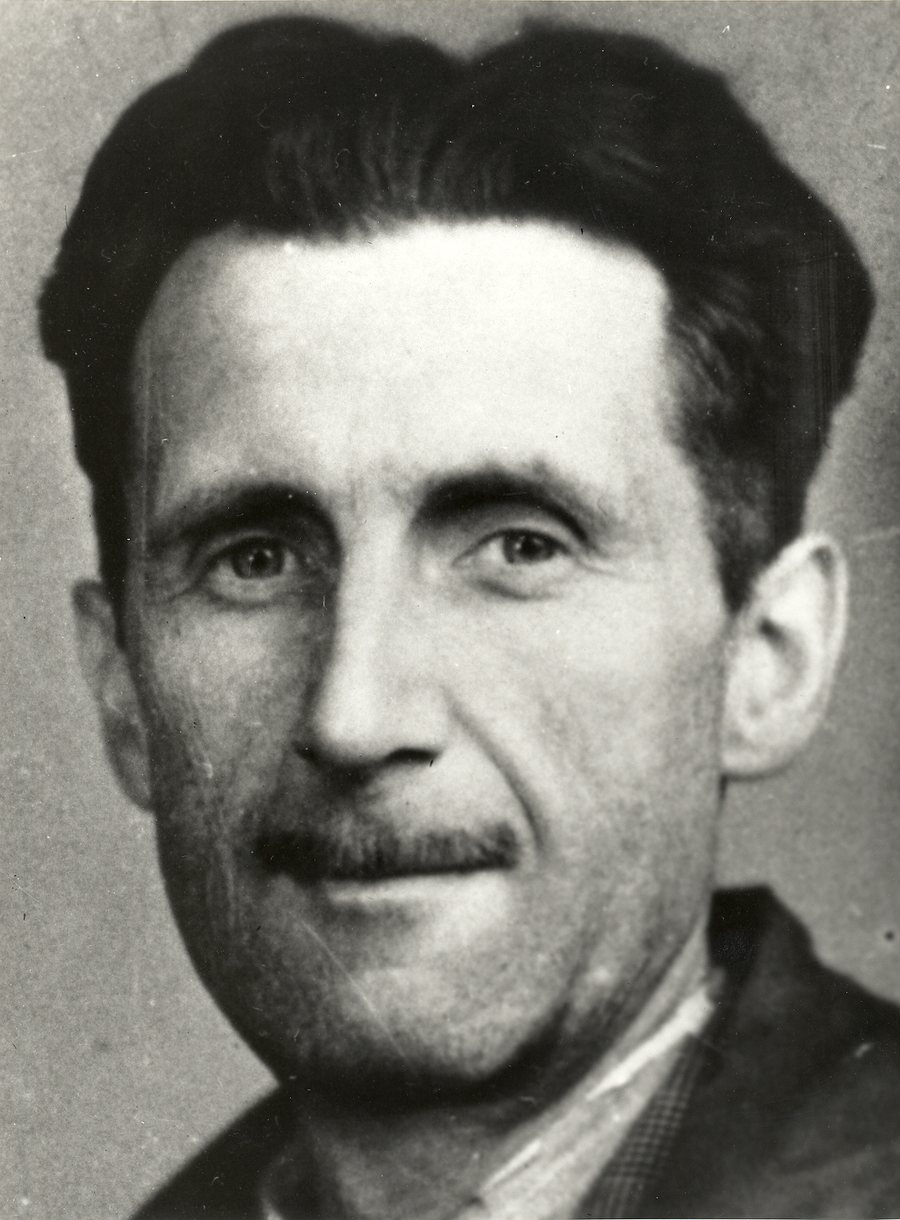
Be a Witness
Chaque élève choisit une réalité de son quotidien qu'on ne voit pas assez : un métier pénible, un lieu oublié, une injustice locale. Il produit une photo ou un court texte, puis le présente à l'oral en 2 minutes.
Les quatre questions à traiter
What did you choose? Where is it? Who is concerned? Why does it matter?
Plan de la séquence
- 1Look at Her Face
Découvrir et décrire Migrant Mother - 2The Woman Behind the Photo
L'histoire de Florence Owens Thompson - 3Orwell Goes to Wigan
Un texte face à une image - 4Hidden Photos
Les photos de l'internement de 1942 - +The pact
Prolongement : débat avec Diane Arbus - 5Big Brother Is Watching You
Propagande et manipulation - 6Be a Witness
Tâche finale et évaluation
Our big question: Can an image or a text change the world?
And the question under it: does being poor make people invisible, or strange, in the eyes of others? Can a photo give back dignity, or take it away?
Fil rouge « Fact or story? ». En séance 2 (Florence), en séance 4 (photos de 1942), en séance 5 (télécrans) et dans le débat, une courte activité compare l'histoire racontée avec des sources citées (Library of Congress, MoMA, National Archives, la famille de Florence, le roman d'Orwell). Le texte de chaque fiche reste intact et se lit d'abord ; l'activité vient après, comme une étape critique : même l'histoire d'une photo se construit. Douter d'une source n'est pas de la méfiance, c'est du respect pour la vérité et pour les personnes photographiées.
Pédagogie de la réussite. Chaque séance avance par petites marches : on montre un modèle avant de demander une production, chaque prise de parole s'appuie sur des amorces de phrases (encadrés bleus « Sentence starters »), et chaque séance se termine par un moment de réussite (encadré vert « Today I can ») où chacun coche ce qu'il sait faire. La grille finale est rédigée en positif : ce que je sais faire.
Dignité d'abord. Ce parcours ne cherche jamais à humilier : il veut éveiller. Certains élèves vivent peut-être eux-mêmes la précarité. Les questions portent sur les photos, les textes, les personnes étudiées et la société, jamais sur la situation des élèves. Personne n'est obligé de parler de sa vie ; le sujet de la tâche finale est libre, et un élève peut choisir un sujet éloigné de lui (un métier observé, un lieu de la ville, un objet).
Supports. Photos d'époque (années 1930-1940, domaine public : Library of Congress, National Archives, Imperial War Museums, Wikimedia Commons), vidéos de sources officielles (PBS, BBC, MoMA, The Met, National Archives, British Pathé, Washington University), textes adaptés avec enregistrement (voix de synthèse naturelles, préparées à l'avance). Aucune image fabriquée.
Je ne conçois pas le professeur assis derrière son bureau pendant toute l'heure : cette époque est révolue. Dans ce parcours, je suis intégrée à chaque étape de la mission, à des places différentes et de manières différentes : à la porte pour accueillir, au tableau pour transmettre, entre les groupes pour observer, à genoux à côté d'un élève pour l'aider, au fond de la salle pour regarder la classe vivre. Savoir se déplacer, se positionner et s'adapter fait partie du métier, au même titre que le contenu. Et si je suis fatiguée, je m'assois, sans aucune culpabilité : c'est prendre soin de soi, parce que ce métier est difficile et qu'il faut le comprendre. Observer, aider, transmettre : cela se fait debout, accroupie ou assise, du moment qu'on reste présent pour chacun.
Madame Carole Paoli Pompougnac
Keeping the room calm · valable pour les six séances
Consignes toujours visibles : la consigne en cours et la suivante restent au tableau ; un élève qui a décroché sait où reprendre sans demander devant tout le monde.
Amorces sur la table : les encadrés « Sentence starters » sont imprimés en bandelettes ; un élève qui bloque en pose une devant lui et commence par là.
Recadrer en privé : s'approcher, parler bas, parler de la tâche et non de l'élève. Pas de bras de fer devant la classe.
Sujets sensibles : on ne demande jamais à un élève de témoigner de sa propre situation. Si un élève choisit d'en parler, on l'écoute sans commentaire et on revient au document.
Session 1
Look at Her Face
J'ai choisi d'ouvrir ce parcours par un visage, avant tout mot et toute date. Regarder longtemps une photo, c'est déjà apprendre à voir le monde, et chacun peut dire ce qu'il ressent : il n'y a pas de mauvaise réponse au premier mot. Je veux que chaque élève reparte en sachant décrire une image en anglais, avec les amorces sous les yeux pour oser parler. Mettre du beau partout où je passe commence ici : une grande photographie, regardée avec respect.
In English: We start with a face, before any words or dates. Everybody can say what they feel: there is no wrong first word. Today, you will learn to describe a photo in English, with sentence starters to help you.
Madame Carole Paoli Pompougnac
Déroulement
Warm-up (5 min). Projeter la photo sans titre ni date. Une seule question : What do you feel when you look at this photo? Un mot par élève au tableau.
Description (15 min). Les élèves décrivent avec la fiche ci-dessous, d'abord à deux, puis en classe entière.
Hypothèses (10 min). Who is she? Where is she? When was the photo taken? Les élèves justifient avec must, might, can't.
Révélation (10 min). Le professeur donne le titre, la date et le contexte. On compare avec les hypothèses.
Trace écrite (10 min). Cinq phrases pour décrire la photo.
Transmettre au moment de la révélation seulement : titre, date, contexte, en phrases courtes. Observer pendant le warm-up et la description : on laisse venir les mots, on ne corrige pas encore. Aider en circulant pendant le travail à deux : souffler un mot (worried, holding, foreground) ou montrer du doigt une amorce de la fiche. Aucun mot proposé au warm-up n'est « faux » : on note tout.
Où se placer : À la porte pour accueillir, la photo déjà projetée ; au fond de la salle pendant le warm-up, pour voir la photo avec les yeux des élèves ; entre les binômes pendant la description, à hauteur de la fiche ; au tableau pour la révélation ; pendant la trace écrite, assis à côté d'un élève qui hésite, si besoin.
Describe the photo
- Is it a colour or a black and white photo?
- How many people can you see?
- What is the woman doing with her hand?
- Where are the children looking? Why, in your opinion?
- How does the woman look? Choose: tired, worried, angry, happy, hopeless, strong.
- In the foreground / in the background / in the middle
- On the left / on the right
- She is looking… / She is holding… / The children are hiding…
- She must be poor. She might be a farmer. She can't be rich.
The 1930s in moving pictures: The Dust Bowl (Ken Burns, PBS)
The opening of the documentary The Dust Bowl (2012), official Ken Burns channel · Open on YouTube · Official trailer on PBS
- Watch without sound. Write three things you can see: I can see…
- Watch with sound. Write two words you hear.
- Finish the sentence: In the 1930s, life was hard because…
The story of the photo: Whose Migrant Mother was this?
The Art Assignment, PBS Digital Studios · first 1 min 50 s · Open on YouTube (English subtitles available)
After the “Révélation” only. Watch the first two minutes and answer:
- What is the photo called? When was it taken?
- The video says: “The mother's worried ___.” Complete.
- Were your hypotheses right? I thought she was… and she was / she wasn't…
Contexte pour le professeur
La photo a été prise en mars 1936 à Nipomo, en Californie, dans un camp de cueilleurs de petits pois. Dorothea Lange travaillait pour une agence du gouvernement chargée de montrer la pauvreté des campagnes. La photo est devenue le symbole de la Grande Dépression.
Compléments vérifiés : l'agence s'appelait alors la Resettlement Administration (future Farm Security Administration) ; la fiche de la Library of Congress porte le titre « Destitute pea pickers in California. Mother of seven children. Age thirty-two. Nipomo, California » et l'autre titre « Migrant mother » (Library of Congress, guide de recherche « Migrant Mother »).
Moments clés et plan B
Avant la sonnerie : la photo est projetée sans titre ; une version papier (une pour deux) est prête.
Si la technique lâche : la photo imprimée suffit pour toute la séance ; les deux vidéos passent en prolongement à la maison ou à la séance suivante ; vous lisez vous-même la fiche de la Library of Congress au moment de la révélation.
Ressources
- La photo en haute définition (Library of Congress, libre de droits)loc.gov · Destitute pea pickers in California… (Migrant Mother), 1936 · toute la série de photos
- Vidéos courtes sur l'histoire de la photoWhose Migrant Mother was this?, The Art Assignment, PBS Digital Studios (11 min) · American Masters, Dorothea Lange: Grab a Hunk of Lightning, preview (PBS, 3 min 31)
- La Grande Dépression expliquée simplementIntroducing The Dust Bowl, Ken Burns · bande-annonce officielle, PBS (30 s)
Session 2
The Woman Behind the Photo
Derrière la photo la plus célèbre de la Grande Dépression, il y a une femme qui avait un nom, des enfants, une fierté. J'ai choisi de raconter sa vie pour qu'on ne regarde plus jamais un visage comme un simple symbole. Je veux éveiller une question simple et humaine : une photo aide-t-elle toujours la personne photographiée ? Chacun pourra donner son avis en s'appuyant sur les amorces, et chaque avis sera respecté. Douter d'une source, ce n'est pas de la méfiance : c'est du respect, pour la vérité et pour les personnes photographiées.
In English: Behind the famous photo, there was a real woman, with a name, children and a lot of pride. Today, we tell her story. You will discover that a photo can help people, but it can also hurt the person in it. Everybody can give an opinion with the sentence starters. Checking a source is not distrust: it is respect for the truth and for the people in the photos.
Madame Carole Paoli Pompougnac
Déroulement
Rappel (5 min). Describe the photo in three sentences.
Lecture (15 min). Texte ci-dessous, lecture silencieuse puis questions.
Grammaire (10 min). Relever les verbes au prétérit, classer réguliers et irréguliers.
Débat (15 min). Did the photo help Florence? Did it help other people?
Trace écrite (5 min). Une phrase d'opinion par élève : I think the photo… because…
Transmettre le prétérit au moment de la grammaire, à partir des verbes du texte. Observer pendant la lecture silencieuse : qui souligne, qui bloque ? Aider en soufflant le sens d'un mot à voix basse plutôt qu'en traduisant le texte pour tous. Pendant le débat, vous êtes un guide, pas un juge : on relance (« Why? Who agrees? »), on ne donne pas « la » bonne réponse. On parle de Florence et de sa famille avec respect : la pauvreté est une situation, pas une identité.
Où se placer : À la porte, la photo de la séance 1 au tableau ; au fond pendant la lecture silencieuse, pour observer sans peser ; au tableau pour le prétérit ; au milieu des élèves pour le débat et « Fact or story? », à hauteur de leurs yeux ; à genoux à côté de l'élève qui bloque, le temps d'une amorce.
Florence's story
Her name was Florence Owens Thompson. She was born in 1903 in Oklahoma. In the 1930s, she travelled to California with her children to find work in the fields.
In March 1936, a photographer called Dorothea Lange stopped her car near a camp of pea pickers. She took six photos of Florence and her children in ten minutes. She didn't ask her name.
The photo became famous all over the world. Newspapers printed it, and the government sent food to the camp. But Florence never got any money from the photo. Many years later, she said she was not happy about it.
Today, the photo is in museums. People know her face, but very few people know her name.
- Where did Florence go in the 1930s? Why?
- How many photos did Dorothea Lange take?
- Did Lange ask Florence her name?
- What happened after the photo was printed in the newspapers?
- Was Florence happy about the photo? Why not, in your opinion?
Her daughters remember her (1992)
Interview with Katherine McIntosh and Norma Rydlewski, filmed in March 1992 by Blackside for the series The Great Depression · WashU Film & Media Archive · from 0:34 to 1:36 · Open on YouTube
Katherine is the girl on the left in the photo. Norma is the baby. Listen to Katherine (one minute):
- Find two adjectives Katherine uses for her mother.
- What did Florence teach her children? Tick: work for what you get be honest help other people be famous
- Complete: Florence was a … woman because …
Did Florence agree with Lange?
The Art Assignment, PBS Digital Studios · from 2:39 to 4:22 · Open on YouTube
- How many years later did people find out her name? More than … years later.
- What did Florence tell a reporter? “I wish she hadn't …”
- Florence often had two jobs. Name one.
Florence's story: let's check the sources
The text tells the story that most people know. Now we check it, like historians, with sources: the photographer's own words, a museum, a library, Florence's family. Read each box: who says what?
Three questions for every source: Who says it? When? Does another source say the same thing?
1 · How many photos? How long?
2 · Where was Florence born?
3 · Did Lange ask?
4 · Two memories of the same day
- How many photos? Complete: Lange says … photos. MoMA says … photos. Read MoMA's sentence again: why did people think there were only five?
- Complete: In 1903, Florence was born in Indian … . It became Oklahoma in … . Is the story wrong, or does it use today's name?
- Lange didn't ask her name. What did she ask, according to Katherine? She asked if…
- Box 4: Lange says that Florence… but Florence says that…
- Conclusion: why do the stories change? Choose one or two ideas, or write your own: people forget people remember differently a story can be more beautiful than the facts …
- The story says… but the source says…
- Lange remembers… but Florence / Katherine remembers…
- We don't know if… because no source says it.
- I think the truth is… because…
- Maybe people prefer this version because…
What we learn: even the story of a photo is built by people. They remember, they forget, they choose. To tell the truth, we listen to several voices, and especially to the voice of the person in the photo.
Pourquoi cette activité (15 min, pendant le temps de débat ou en prolongement). La fiche donne la version que le grand public connaît : on la garde telle quelle et on la lit d'abord, avec ses questions. Cette étape vient ensuite, comme un moment critique : on ne « corrige » pas le texte, on montre comment une histoire se construit (le souvenir de Lange en 1960, les archives, la mémoire de la famille). C'est le cœur du thème : dire la vérité, c'est aussi savoir d'où vient ce qu'on raconte. Pas de question piège : chaque réponse est écrite dans une source citée, et toutes les conclusions argumentées sont acceptées.
Sources vérifiées. Lange, Popular Photography, février 1960 (« I made five exposures… I did not ask her name or her history ») : guide « Migrant Mother » de la Library of Congress, qui conserve cinq vues de la série et signale deux autres vues au Oakland Museum. Sarah Meister, MoMA, 6 février 2020 : sept vues. Notice MoMA de l'œuvre : dans les années 1970, Florence conteste le récit de Lange (pas de conversation, pas de pneus vendus). Katherine McIntosh, CNN, 2 décembre 2008. Naissance le 1er septembre 1903 à Tahlequah, Territoire indien (Library of Congress) ; État d'Oklahoma le 16 novembre 1907 (Oklahoma Historical Society). Les « dix minutes » circulent souvent, mais je n'en ai trouvé aucune source primaire : on le dit aux élèves simplement, « no source says it ».
- I agree with… / I don't agree because…
- On the one hand… on the other hand…
- The photo helped people because… / The photo used her because…
Moments clés et plan B
Avant la sonnerie : la photo de la séance 1 est projetée pour le rappel.
Si la technique lâche : vous lisez le texte deux fois (lentement, puis normalement) ; les citations des vidéos se lisent dans les corrigés (bouton « Answers ») ; le débat se fait sans vidéo.
Ressources
- Les autres photos de la série (Library of Congress)guides.loc.gov · Migrant Mother Series of Images
- Vidéos sur Florence Owens Thompsonentretien avec ses filles Katherine McIntosh et Norma Rydlewski, 1992 (WashU Film & Media Archive) · Whose Migrant Mother was this?, The Art Assignment, PBS Digital Studios · CNN, 2 décembre 2008 : Katherine McIntosh se souvient
Session 3
Orwell Goes to Wigan
Un texte face à une image
Orwell a choisi d'aller voir de ses propres yeux la vie des mineurs du nord de l'Angleterre, et d'en témoigner par l'écriture. Je place son texte face à la photo de Lange parce que les mots et les images ne disent pas le monde de la même manière : comparer les deux, c'est apprendre à regarder. Ce qui me touche dans ce passage, c'est le regard de la jeune femme : la misère ne lui a rien enlevé de son intelligence ni de son humanité. Le contenu est exigeant, et le tableau guide chacun pas à pas.
In English: George Orwell went to see the life of miners with his own eyes, and he wrote about it. Today, we put his text next to Lange's photo: words and images show the world in different ways. The young woman in the text understands her life. Being poor never takes away a person's mind or dignity.
Madame Carole Paoli Pompougnac
Déroulement
Mise en route (5 min). Montrer une photo d'une ville minière anglaise des années 1930. What can you see? Would you like to live there?
Présentation d'Orwell (10 min). Courte vidéo ou fiche : un écrivain qui choisit d'aller vivre chez les pauvres pour raconter leur vie.
Lecture (15 min). Texte adapté ci-dessous.
Comparaison (15 min). Tableau image / texte à compléter à deux.
Bilan (5 min). Which is more powerful for you, the photo or the text?
Supports proposés ici : pour la mise en route, le film d'archives British Pathé (Wigan, 1930) et la photo de mineur de 1942 ; pour la présentation d'Orwell, la biographie de l'Orwell Foundation (lien dans les ressources).
Transmettre le contexte en deux phrases (Orwell, 1936, les villes du charbon du nord de l'Angleterre) avant la lecture. Observer pendant la comparaison texte / photo : laisser les binômes chercher avant de corriger. Aider en montrant la ligne du texte où se trouve la réponse plutôt qu'en la donnant. La femme du texte n'est pas « une pauvre » : Orwell insiste sur ce qu'elle comprend ; on garde ce regard-là dans la discussion.
Où se placer : À la porte pour accueillir ; au tableau pour présenter Orwell ; entre les binômes pendant le tableau de comparaison, d'une table à l'autre ; au fond de la salle pour le bilan, pour que la parole circule entre les élèves.
Wigan in 1930: the end of “Wigan Pier”
British Pathé newsreel, 1930: the old wooden jetty called “Wigan Pier” is taken down · Open on YouTube · The Orwell Foundation: The Road to Wigan Pier
- Watch once. Write three things you can see: I can see water / men / houses…
- Is it a rich town or a poor town, in your opinion? It looks… because…
- Six years later, Orwell came to Wigan. What do you think he saw?
A face from the train
In 1936, the writer George Orwell travelled to Wigan, a mining town in the north of England. He wanted to see how poor workers really lived. He stayed in cheap houses and went down the coal mines.
One day, he left the town by train. From the window, he saw a young woman behind a row of small, dirty houses. It was very cold. She was kneeling on the ground and trying to clean a blocked pipe with a stick.
She looked up at the train. Her face was pale and tired. She was about twenty-five, but she looked forty. Orwell wrote that her eyes showed she understood exactly what was happening to her. She knew her life was hard and hopeless.
Le texte est une réécriture simplifiée de l'épisode du livre, pas une citation d'Orwell.
- Why did Orwell go to Wigan?
- Where was he when he saw the woman?
- What was she doing?
- How old was she? How old did she look?
- Find three adjectives that describe her life.
The photo and the text
| Migrant Mother | The woman in Wigan | |
|---|---|---|
| Country | USA | |
| Year | 1936 | |
| Who made it? | Dorothea Lange | |
| Image or text? | ||
| Her feelings | ||
| What I learn |
- In the photo, we can see… In the text, we can imagine…
- For me, the photo / the text is more powerful because…
- Both women are… / Both show…
Vocabulary
a coal minea minera slumunemployedexhaustedpaleto kneela pipehopelesspoverty
Repères vérifiés pour le professeur. Orwell séjourne à Wigan et dans le nord industriel entre janvier et mars 1936 ; The Road to Wigan Pier paraît en 1937 (Left Book Club), alors qu'il est en Espagne (The Orwell Foundation). « Wigan Pier » était un vieil embarcadère en bois sur le canal, démoli en 1930 : Orwell explique que le nom était devenu une plaisanterie de music-hall. Dans le chapitre 1, depuis le train, il voit une jeune femme qui débouche un tuyau dans une arrière-cour et écrit : “She knew well enough what was happening to her.” (George Orwell, The Road to Wigan Pier, 1937, ch. 1). La photo de mineur ci-dessus date de 1942 et n'a pas été prise à Wigan : on la présente comme une image du travail dans les mines britanniques de l'époque.
Moments clés et plan B
Si la technique lâche : le film d'archives (muet, avec musique) passe en prolongement ; vous décrivez en deux phrases ce qu'on y voit et la comparaison texte / photo se fait sur papier.
Ressources
- Vidéos sur The Road to Wigan PierBritish Pathé, 1930 : la fin du vrai « Wigan Pier » (film d'archives) · The Orwell Foundation, The Road to Wigan Pier (présentation du livre)
- Courtes biographies d'OrwellThe Orwell Foundation, Biography · BBC History, George Orwell (1903-1950)
- Photos de Wigan et des mineurs dans les années 1930mineur britannique au front de taille, 1942 (Imperial War Museums, domaine public) · le film British Pathé ci-dessus montre Wigan en 1930
Session 4
Hidden Photos
Les photos de l'internement de 1942
Ces photos ont dérangé le pouvoir au point d'être tenues à l'écart du public pendant la guerre. J'ai choisi cet épisode méconnu parce qu'il montre qu'une image peut faire peur à un gouvernement, et que la vérité finit par revenir. La grammaire du passif prend ici tout son sens : quand on dit « the photos were hidden », on peut taire qui les a cachées. Je ne donnerai pas la réponse morale : je veux que chacun la trouve, avec les documents et les amorces. Douter d'une source, ce n'est pas de la méfiance : c'est du respect, pour la vérité et pour les personnes photographiées.
In English: During the war, these photos were kept away from the public because they showed the truth. Today, you will discover a part of American history that many people don't know, and you will learn the passive: “The photos were hidden.” Then you will decide for yourself: is it right to hide the truth? Checking a source is not distrust: it is respect for the truth and for the people in the photos.
Madame Carole Paoli Pompougnac
Déroulement
Mise en route (10 min). Projeter la photo d'une épicerie d'Oakland, mars 1942, avec une grande pancarte « I am an American » sur la vitrine. Questions : What can you read? Why would someone write this on a shop?
Lecture (15 min). Texte adapté ci-dessous.
Grammaire (10 min). Relever les phrases au passif, puis transformer des phrases actives.
Réflexion (15 min). Why did the army hide the photos? Is it right to hide the truth during a war?
Transmettre les faits clairement (1942, ordre exécutif 9066, environ 120 000 personnes d'origine japonaise déplacées). Observer les réactions aux photos sans les commenter tout de suite. Aider au moment du passif en donnant le modèle au tableau (The photos were hidden. The families were sent…). Sur l'injustice, on ouvre la question (« Was it fair? Why? ») au lieu de donner la réponse morale : les élèves la trouvent seuls avec les documents.
Où se placer : À la porte, la photo « I am an American » déjà projetée ; en retrait sur le côté pendant la découverte des photos, pour laisser venir les réactions ; au tableau pour le passif ; entre les groupes pendant « Fact or story? » ; assis au milieu des élèves pour la réflexion, à la même hauteur : un guide, pas un juge.
Note: the store was in fact at 401 to 403 Eighth Street and Franklin Street; the original caption says 13th Street (Library of Congress).
The photos nobody saw
In December 1941, Japan attacked the American base of Pearl Harbor. The United States entered the Second World War.
In 1942, about 120,000 people of Japanese origin were sent to camps in the desert. Most of them were American citizens. They lost their homes, their shops and their jobs.
The government asked Dorothea Lange to photograph this. But her photos showed sad families, children with labels on their coats, and people waiting in long lines. The army didn't like them. The photos were hidden for many years.
In 1988, the American government officially apologised to the survivors. Lange's photos were finally published in a book in 2006.
- What happened in December 1941?
- Where were the people of Japanese origin sent?
- Were they foreigners or American citizens?
- Why didn't the army like Lange's photos?
- What did the government do in 1988?
The army hid the photos. → The photos were hidden by the army.
The government sent families to camps. → Families were sent to camps.
Your turn: They closed the shops. / Lange took the photos. / A publisher printed the book.
- The photos were hidden because…
- I think it is right / it isn't right to hide the truth because…
- During a war, a government might… but…
Lange's photos of the internment (PBS, 2 minutes)
American Masters, Dorothea Lange: Grab a Hunk of Lightning (PBS, 2014), clip · Open on YouTube · On PBS
Later, Lange said: “This is what we did. How did it happen? How could we?” (quoted by PBS)
- Who asked Lange to take these photos? The … asked her.
- Did she like this job? Find one word or one sentence.
- Lange says “we”. Who is “we”, in your opinion?
Why were the photos hidden? (Vox)
Vox, 10 January 2022 · Open on YouTube · also: US National Archives, Images of Internment
- What one word is written on many of Lange's photos? “i_ _ _ _ _ _ _ d”
- In which year did many people see the photos for the first time?
- Why did the government not want people to see them? Because they showed…
Hidden photos: let's check the sources
The text tells the story that many people know. Now we check it with an important source: the National Archives, the place where the American government keeps its documents and photos. Read each box: who says what?
Three questions for every source: Who says it? When? Does another source say the same thing?
1 · Hidden? When?
2 · Published in 2006?
3 · Where does the “secret photos” story come from?
- When were the photos kept away from the public? Tick: during the war after the war
- Use the passive, like in the grammar box. Complete: During the war, the photos … (withhold). After the war, they … (keep) in the National Archives. In 1998, they … (put) online.
- Which sentence is closer to the sources? “The photos were hidden for sixty years.” “The photos were kept away from the public during the war; after the war, anybody could ask to see them.”
- Why do many people believe the “secret photos” story? Maybe people prefer this version because…
- The story says… but the source says…
- During the war, the photos were… After the war, they were…
- I think the truth is… because…
- Maybe people prefer this version because…
What we learn: the camps were real, the injustice was real, and the photos were kept away from the public during the war: these are facts. The “secret for sixty years” part is a story that grew later. Even the story of the photos is built by people. To tell the truth, we separate the facts from the story.
Pourquoi cette activité (10 à 15 min, après la grammaire ou en prolongement). La fiche garde la version que beaucoup connaissent ; on la lit d'abord. L'étape « Fact or story? » vient ensuite : les National Archives (2017) distinguent ce qui est vrai (photos retenues pendant la guerre) de ce qui a grandi plus tard (un « secret de soixante ans », né d'un article de novembre 2006). L'injustice de l'internement, elle, n'est jamais remise en question : on le dit clairement. La question 2 réinvestit le passif (were withheld, were kept, were put).
Repères vérifiés pour le professeur. Ordre exécutif 9066 signé par Franklin D. Roosevelt en février 1942 ; environ 120 000 personnes d'origine japonaise, en majorité citoyens américains, sont déplacées et internées. Lange est engagée par la War Relocation Authority ; beaucoup de ses photos sont marquées « impounded » et restent peu vues pendant la guerre ; l'exposition Executive Order 9066 (California Historical Society, 1972) les fait connaître du grand public (Densho Encyclopedia ; Vox). Le livre de 2006 cité dans le texte est Impounded: Dorothea Lange and the Censored Images of Japanese American Internment (Linda Gordon et Gary Y. Okihiro, W. W. Norton). Le 10 août 1988, le Civil Liberties Act présente les excuses officielles du gouvernement et accorde une réparation aux survivants. Nuance (reprise dans l'activité « Fact or story? ») : selon les National Archives, la plupart de ces photos ont été retenues pendant la guerre, puis versées aux Archives en juin 1946 sans restriction d'usage, et toutes sont en ligne depuis 1998 ; le grand public les a surtout découvertes avec l'exposition de 1972 (National Archives, « Correcting the Record »).
Moments clés et plan B
Si la technique lâche : les quatre photos imprimées (une série par groupe) suffisent ; vous lisez la citation de Lange et les corrigés des vidéos ; les vidéos passent en prolongement.
Ressources
- La photo « I am an American » (Library of Congress)loc.gov · Oakland, Calif., Mar. 1942. A large sign reading “I am an American”…
- Les photos de Lange sur l'internementDensho Digital Repository, Dorothea Lange Collection (mars-juillet 1942, légendes d'origine) · National Archives, catalogue
- Vidéos explicatives sur l'internementAmerican Masters, PBS · Vox · US National Archives
Prolongement · entre la séance 4 et la séance 5 · débat
The Pact: Who Gets to Be Seen?
Pour moi, il existe un pacte tacite entre la personne photographiée et celui qui photographie, fondé sur le respect mutuel. Ce pacte met l'humanité au cœur du débat : être pauvre ne fait de personne un objet de curiosité. J'ai voulu confronter trois regards, Lange, Orwell et Diane Arbus, pour que chacun se forge le sien. On parle des œuvres et des personnes étudiées, jamais de soi si l'on ne le souhaite pas, et les amorces sont là pour que tout le monde ose prendre la parole. Douter d'une source, ce n'est pas de la méfiance : c'est du respect, pour la vérité et pour les personnes photographiées.
In English: Between a photographer and the person in the photo, there is a pact: mutual respect. Today, we compare three ways of looking at people: Lange, Orwell and Diane Arbus. Being poor never makes a person strange or less human. Use the sentence starters: everybody's voice matters in this debate. Checking a source is not distrust: it is respect for the truth and for the people in the photos.
Madame Carole Paoli Pompougnac
Our debate question: Does being poor make people invisible, or strange, in the eyes of others?
Is there a pact between the photographer and the person in the photo? Can a photo give back dignity, or take it away?
Transmettre peu : trois repères sur Arbus, puis on laisse les documents parler. Observer pendant le travail en groupes : qui ose prendre la parole avec une amorce ? Aider en tendant une bandelette d'amorces à l'élève qui hésite. Vous êtes un guide, pas un juge : il n'y a pas de bonne réponse attendue sur Arbus ou sur Lange. On protège la parole de chacun et on n'expose personne : on parle des photos et de la société, jamais de la situation des élèves.
Où se placer : À la porte pour accueillir ; brièvement au tableau pour les repères sur Arbus ; entre les groupes, les bandelettes d'amorces à la main ; pendant le débat, au fond ou sur le côté, pour que les élèves se parlent entre eux et pas seulement au professeur.
Three people, three moments
Lange, Popular Photography, February 1960 (Library of Congress)
Her daughter Katherine, in 2008: “We were ashamed of it.”
Session 2 · PBS Digital Studios · CNN
Session 3 · The Road to Wigan Pier, chapter 1
- Lange speaks of “equality”. Does Florence feel the same? Lange thinks… but Florence…
- Orwell looks at the woman's face. What does he understand? He understands that she…
What was the deal between Lange and Florence?
In Séance 2, we checked the sources. Now, let's read them again with one question: was there a promise?
The Art Assignment, PBS Digital Studios · from 8:35 to 10:00 · Open on YouTube
- What was the deal? Complete: Florence let Lange take the picture because she thought…
- In 1936, did the photo help Florence's family? The photo was printed, but the family…
- In 1983, how did the photo help Florence in the end?
- Was the pact respected? I think the pact was / wasn't respected because…
What we learn: the pact between a photographer and a person is not only about the photo. It is also about what happens after. Listening to Florence and her children is part of telling the truth.
Le pacte, par les sources (vérifié). Les deux récits s'accordent sur l'essentiel : la photo devait « aider ». Lange (1960) parle d'une « sorte d'égalité » ; Katherine (CNN, 2008) dit que Lange a demandé la permission et promis que le nom ne serait pas publié, et que la famille était déjà partie quand la photo est parue. Lange était salariée de l'État fédéral : ses images de cette période sont dans le domaine public, reproductibles gratuitement par tous (Sarah Meister, MoMA) ; elle ne les a donc pas vendues, mais sa notoriété doit beaucoup à cette photo, ce que la famille a eu du mal à accepter (The Art Assignment, PBS). En 1983, l'appel de la famille dans le San Jose Mercury News suscite lettres et dons pour ses soins (Library of Congress) : la famille commence alors à voir la photo autrement. On ne tranche pas : on laisse les élèves peser les deux côtés, avec les amorces de l'étape 3.
Diane Arbus (1923 to 1971), New York
Diane Arbus was an American photographer. She photographed people in the streets and homes of New York: children, couples, families, circus and carnival performers, people that many others did not look at. She once said: “For me the subject of the picture is always more important than the picture. And more complicated.”
The Metropolitan Museum of Art, Diane Arbus: In the Beginning (2016), 1 min 38 · Open on YouTube
Her photos are protected by copyright: we look at them on the museums' websites.
- MoMA, New York: Diane Arbus (works online)
- The Met: Diane Arbus: In the Beginning
- SFMOMA, San Francisco: Diane Arbus · a short talk about A Young Brooklyn Family Going for a Sunday Outing, N.Y.C. (1966)
- Watch the video. Complete: “You feel the authentic quality of each of the ___.”
- On the MoMA page, choose one photo. Write its title and three things you can see.
- Look at the person's eyes. The person looks… / I think the person agreed / didn't agree to be photographed because…
Is there a pact between the photographer and the person in the photo?
- Did the photographer respect the person? Think of Lange and Florence, then of Arbus.
- Does poverty make people invisible, or strange, in the eyes of others?
- Can a photo give back dignity, or take it away?
- Orwell writes about a face he saw for one second. Is a text kinder than a photo, or not?
- I think there is a pact because… / I don't think there is a pact because…
- In my opinion, Lange respected Florence because… / didn't respect her because…
- Florence wasn't happy because… Lange thought…
- When people are poor, others sometimes don't see them / see them as…
- A photo can give back dignity when… / A photo can take dignity away when…
- Like the woman in Orwell's text, the person in this photo understands…
- Arbus looks at people who… I find it… because…
- I agree with you, and… / I see your point, but…
Final sentence (written): A good photographer respects the person in the photo when…
Repères vérifiés pour le professeur. Diane Arbus (New York, 1923-1971) photographie à partir de la fin des années 1950 à New York (Times Square, Coney Island, Lower East Side) : enfants, couples, familles, artistes de cirque et de fête foraine, personnes en marge. Exposée en 1967 dans New Documents au MoMA ; rétrospective au MoMA en 1972, la même année où elle est la première photographe américaine montrée à la Biennale de Venise (MoMA ; Smithsonian American Art Museum ; The Met). Ses archives sont conservées au Metropolitan Museum depuis 2007. Ses images sont protégées (© The Estate of Diane Arbus) : on les consulte uniquement sur les sites des musées, on ne les copie pas.
La question de fond, sans jargon. Être pauvre fait-il de quelqu'un un objet de curiosité, voire un « monstre » aux yeux des autres ? La pauvreté retire-t-elle une part d'humanité ? Le parcours répond par les documents : Florence était « a strong lady, a very proud lady », la femme de Wigan comprend parfaitement sa situation, et Arbus disait que la personne photographiée comptait plus que la photo. On laisse les élèves formuler eux-mêmes : la pauvreté n'enlève pas l'humanité, c'est le regard des autres qui peut le faire.
Personne n'est exposé. Aucune question ne porte sur la situation personnelle des élèves ; on ne demande à personne de raconter sa vie. Si un élève parle de lui, on l'écoute, on remercie, on revient au document.
Moments clés et plan B
Durée : une séance, ou deux temps de 25 minutes en fin de séances 4 et 5.
Si la technique lâche : pas d'image d'Arbus imprimée (droits) : vous décrivez une photo à voix haute à partir de la page du MoMA consultée avant le cours, et le débat s'appuie sur les trois citations de l'étape 1.
Session 5
Big Brother Is Watching You
En Espagne, Orwell a vu des journaux mentir, et il ne l'a jamais oublié. J'ai choisi ses deux grands livres et une photo truquée parce que savoir repérer une manipulation est une force pour toute la vie, dans un monde rempli d'images. Je ne vise aucun parti ni aucun média : je transmets une méthode, quatre questions simples que chacun peut appliquer. Je veux que chaque élève reparte en se sentant capable de vérifier une image. Douter d'une source, ce n'est pas de la méfiance : c'est du respect, pour la vérité et pour les personnes photographiées.
In English: In Spain, Orwell saw newspapers tell lies, and he never forgot it. Today, you will discover Animal Farm, 1984 and a photo that was changed to erase a man. You will learn four simple questions to check an image: it is a skill for life. Checking a source is not distrust: it is respect for the truth and for the people in the photos.
Madame Carole Paoli Pompougnac
Déroulement
Mise en route (10 min). Écrire au tableau les trois slogans de 1984 : War is peace. Freedom is slavery. Ignorance is strength. Question : Are these sentences true? Why would a government say them?
Lecture (15 min). Texte adapté ci-dessous.
Activité image (15 min). Montrer deux photos de Staline au bord d'un canal, avant et après : un homme a disparu de la seconde. Spot the difference, puis Why was he erased?
Lien avec aujourd'hui (10 min). Fake news, photos retouchées, images créées par intelligence artificielle. How can you check if an image is true?
Transmettre les repères sur Orwell et les deux livres, simplement. Observer pendant « Spot the difference » : on laisse chercher, le premier qui trouve ne crie pas, il lève la main. Aider pendant la lecture en soufflant un mot (chase away, equal, rules). Pour le lien avec aujourd'hui, on ne vise aucun média ni aucun parti : on donne une méthode (les 4 questions), pas une opinion.
Où se placer : À la porte, les slogans déjà écrits au tableau ; au tableau pour lancer la séance ; entre les binômes pendant « Spot the difference », à hauteur des photos avec eux ; au fond de la salle pendant le lien avec aujourd'hui, pour écouter les idées circuler.
BBC News: George Orwell's 1984, why it still matters
BBC News · the first 1 min 10 s · Open on YouTube
- Listen to the beginning: write the three slogans.
- Where did Orwell see newspapers telling lies? In…, during the…
- True or false: the Ministry of Truth in the book was inspired by Orwell's job at the BBC.
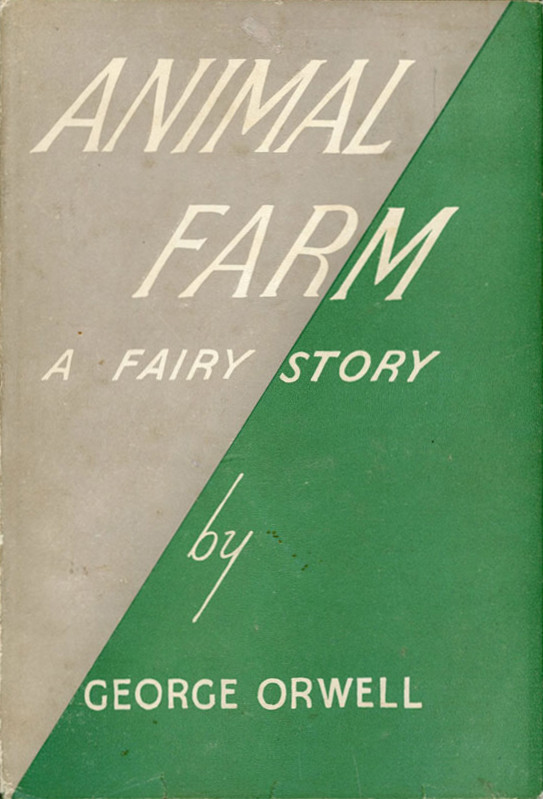
Orwell's warnings
George Orwell fought in the Spanish Civil War in 1937. There, he saw that newspapers told lies about what was really happening. He never forgot it.
In 1945, he wrote Animal Farm. The animals of a farm chase away the farmer. At first, they decide that all animals are equal. But the pigs take power and slowly change the rules. At the end, the famous rule says: “All animals are equal, but some animals are more equal than others.” Several publishers refused the book at first.
In 1949, he wrote 1984. In this book, a government called the Party watches everybody with cameras called telescreens. Its leader is Big Brother. The hero, Winston, works at the Ministry of Truth. His job is to change old newspapers and photos so that the Party is always right.
- What did Orwell discover in Spain?
- Who takes power in Animal Farm?
- Explain the rule “some animals are more equal than others” in your own words.
- How does the Party watch people in 1984?
- What is Winston's job? Is it a real “Ministry of Truth”?
- In Spain, Orwell discovered that…
- In Animal Farm, the … take power.
- This rule means that some animals have more…
- The Party watches people with…
- Winston's job is to… It is not a real Ministry of Truth because…
Telescreens: let's go back to Orwell's book
Our text is a short, simple version of the novel. Let's compare it with Orwell's own words, in chapter 1 of 1984.
- What is a telescreen? Tick all the good answers: a TV a camera a microphone
- Is our text wrong? wrong simplified: it gives only one part of the truth
- Why is a two-way screen frightening? It is frightening because you never know…
- Winston changes old newspapers and photos. In 1984, who decides what the story is? The … decides.
- Our text says… but Orwell wrote…
- A telescreen is not only a camera, it is also…
- I think the simple version is useful / not enough because…
- In 1984, the person who tells the story…
What we learn: a simple version is not always a false version, but it can hide part of the truth. To tell the truth, we go back to the original text. In 1984, the Party controls the story: that is why Orwell wants us to check.
Pourquoi cette activité (10 min, après les questions). Le texte de la fiche reste tel quel : il donne l'idée essentielle. On revient ensuite au roman (chapitre 1) : le télécran est un écran à double sens, qui diffuse et qui capte l'image et le son (« The telescreen received and transmitted simultaneously »). On fait distinguer « simplifié » et « faux » : c'est la même démarche que pour Florence (séance 2) et pour les photos de 1942 (séance 4), et elle prépare les quatre questions pour vérifier une image.
Spot the difference
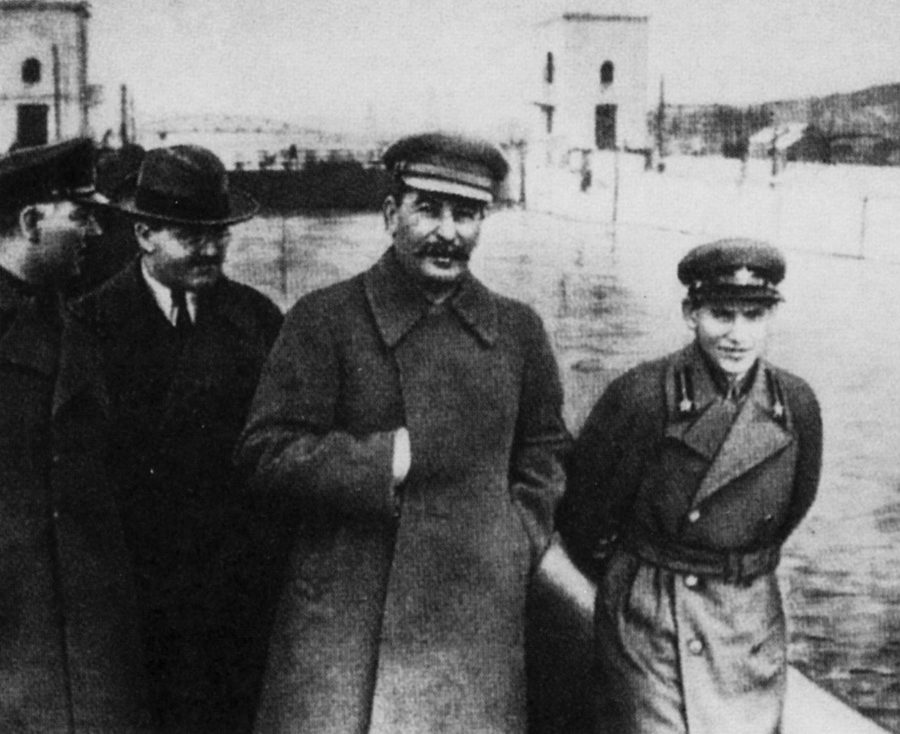
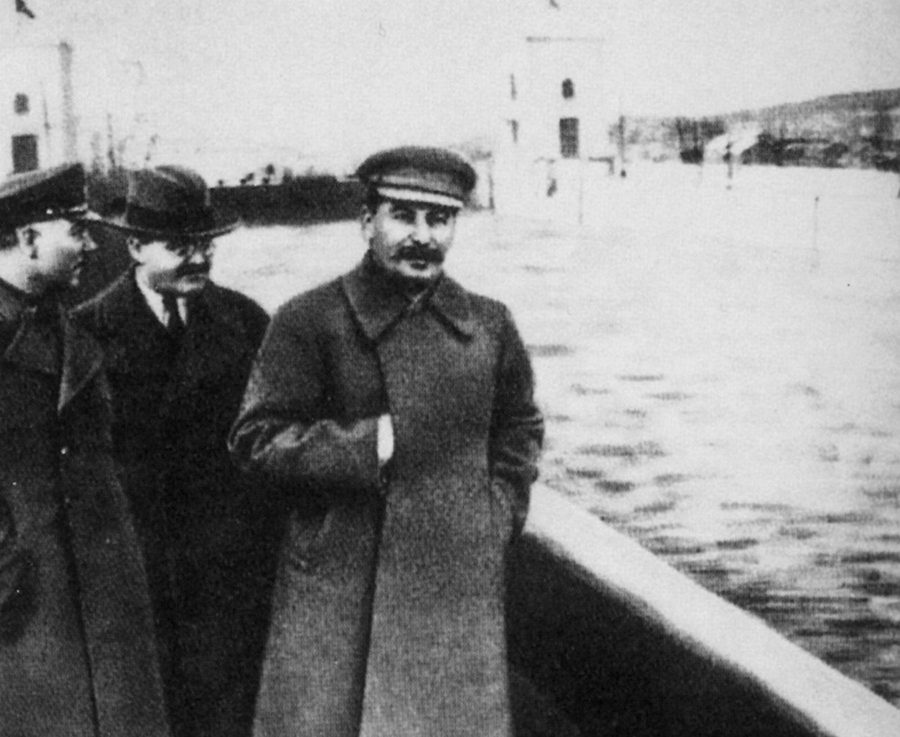
- Spot the difference: In the first photo, there is… In the second photo, there isn't…
- Why was he erased? He was erased because…
- Who in 1984 does the same job? (Look at the text.)
Who published it? When was it taken? Can I find it on another reliable website? Does anything look strange (hands, shadows, text)?
Two films, two trailers
Animal Farm (1954), animated film by John Halas and Joy Batchelor, trailer · Rotten Tomatoes Classic Trailers · YouTube
Nineteen Eighty-Four (1984), film by Michael Radford with John Hurt and Richard Burton, teaser · Rotten Tomatoes Classic Trailers · YouTube
- Animal Farm: which animals can you see? I can see pigs, …
- 1984: what colours do you see? How do the people look? They look…
- Which film would you like to watch? I'd like to watch… because…
Repères vérifiés pour le professeur. Orwell arrive en Espagne fin 1936 et combat sur le front d'Aragon en 1937 ; Animal Farm paraît en août 1945 après plusieurs refus d'éditeurs ; Nineteen Eighty-Four paraît en juin 1949 (The Orwell Foundation). Dans le roman, le télécran est un écran à double sens : on le regarde et il vous regarde (BBC News : « the two-way telescreen »). Nikolaï Iejov, chef de la police politique (NKVD) de 1936 à 1938, est arrêté en 1939 et exécuté en 1940, puis effacé des photos officielles.
Moments clés et plan B
Si la technique lâche : les deux photos de Staline imprimées côte à côte (une paire par binôme) ; vous lisez le texte deux fois ; les bandes-annonces passent en prolongement.
Ressources
- Résumés vidéo d'Animal FarmBBC Bitesize, Animal Farm (vidéo : intrigue, personnages, thèmes) · BBC Teach, Animal Farm: Plot
- Vidéos courtes sur 1984BBC News, George Orwell's 1984: Why it still matters · The Orwell Foundation, Nineteen Eighty-Four
- Staline et Iejov : la photo retouchéeavant (Wikimedia Commons) · après (Wikimedia Commons)
Session 6
Be a Witness
Après Lange et Orwell, c'est au tour des élèves d'être témoins. Le sujet est libre : un lieu, un métier, un objet, une réalité qu'on ne regarde pas assez ; personne n'a à exposer sa propre vie. Je donne d'abord un modèle, puis une fiche et des amorces, pour que chacun réussisse ses deux minutes de parole. La grille dit ce que l'élève sait faire, parce que je crois qu'on progresse en voyant ses réussites.
In English: Now it's your turn to be a witness, like Lange and Orwell. You choose your subject: a place, a job, an object, something people don't look at enough. You listen to an example first, then you prepare with your card. You will speak for two minutes, and you can do it.
Madame Carole Paoli Pompougnac
Déroulement
Retour sur la problématique (10 min). Can an image or a text change the world? Chaque élève donne un exemple vu dans la séquence.
Préparation (20 min). Les élèves finalisent leur photo ou leur texte et remplissent la fiche de préparation. Les photos peuvent être prises avant la séance avec le téléphone, sans visage reconnaissable sans autorisation.
Passages (le reste de la séance, et la suivante si besoin). 2 minutes par élève, puis une question de la classe.
Transmettre le modèle d'abord : on écoute l'exemple de présentation avant toute préparation. Aider pendant la préparation en circulant, carte par carte : une amorce, un mot, une phrase à reformuler. Observer pendant les passages, grille en main, sans interrompre ; on note d'abord ce qui est réussi. Le sujet reste le choix de l'élève : on n'attend aucun témoignage personnel, et un sujet « simple » (un arrêt de bus, un métier observé) est aussi valable qu'un autre.
Où se placer : À la porte, avec un mot d'encouragement pour chacun ; entre les tables pendant la préparation, à genoux à côté de la carte d'un élève ; au fond de la salle pendant les passages, assis si besoin, pour que l'élève parle à la classe et non au professeur ; debout pour féliciter à la fin de chaque passage.
MoMA: “Dorothea Lange: Words & Pictures”
The Museum of Modern Art, New York, 2020 · Open on YouTube
- Listen and complete: “A human face is the universal ___.”
- Why do photographers show faces, in your opinion? Because a face shows…
- Your photo can show a place, an object or hands at work, without a face. What will be in your photo?
My witness card
What: I chose…
Where: It is in… / It happens in…
Who: The people concerned are…
Description: In the foreground… In the background…
Why it matters: I think people should know about this because…
Link with the learning journey: Like Dorothea Lange / like George Orwell, I want to show…
I chose a photo of the bus stop near my school. It is on a busy road, with no shelter and no bench. Every morning, many students wait there in the rain. In the foreground, you can see a girl with a wet backpack. People must think it's not important, but students wait there for 20 minutes every day. Like Dorothea Lange, I want to show a problem that nobody looks at.
Un métier de leur filière vu de près · un lieu abandonné de leur ville · le travail d'un parent · l'accès aux transports · le prix des repas · un commerce qui ferme
Grille d'évaluation de la tâche finale
| Critère | Points |
|---|---|
| Je décris ce que j'ai choisi (what, where, who) | /5 |
| J'explique pourquoi c'est important | /5 |
| J'utilise le présent, le prétérit et un modal | /4 |
| Je parle de façon claire et compréhensible | /4 |
| Je réponds à une question de la classe | /2 |
| Total | /20 |
Photos et dignité. Pas de visage reconnaissable sans autorisation ; pas de photo de personnes en difficulté sans leur accord ; on préfère les lieux, les objets, les mains au travail. Le sujet est libre : aucun élève n'a à montrer sa propre situation. Un texte court peut remplacer la photo.
Moments clés et plan B
Avant la sonnerie : l'ordre de passage est affiché ; les volontaires commencent.
Si la technique lâche : l'élève décrit sa photo de mémoire avec sa carte, ou présente son texte ; vous lisez vous-même l'exemple de présentation.
During your work placement · Pendant la PFMP
On placement? Keep up with the class from your phone
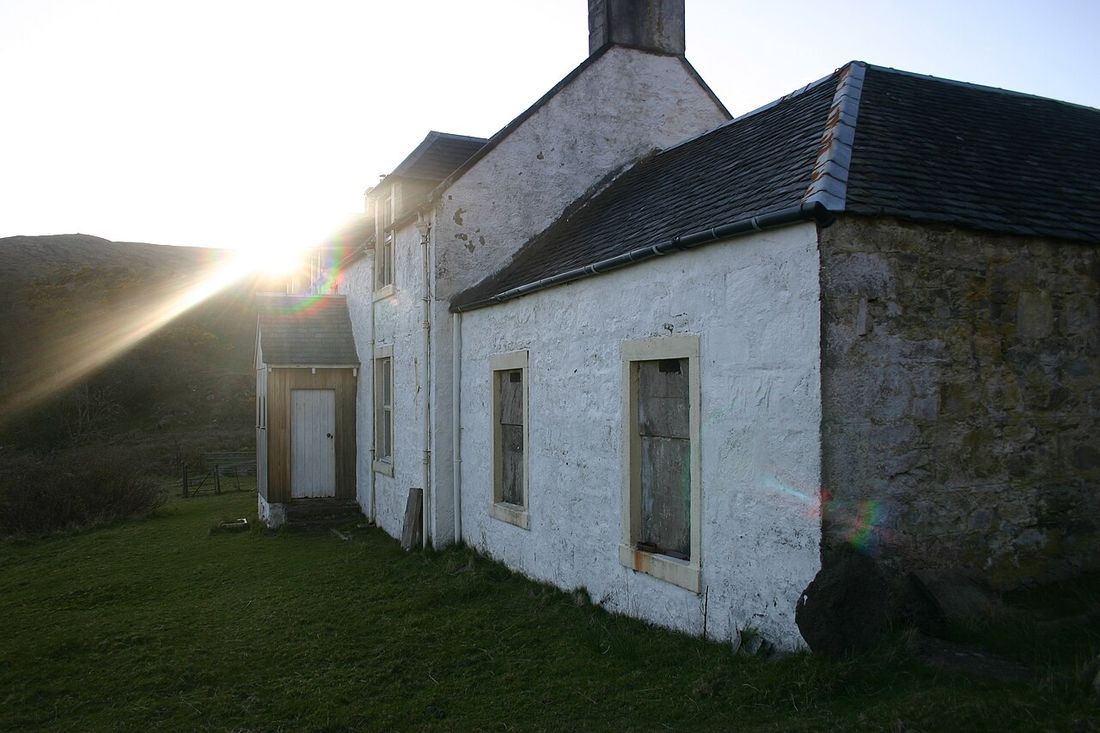
Far from the classroom, still on the journey
Orwell wrote his most famous novel far from London, in a farmhouse on a remote Scottish island. You will be far from the classroom too, at your workplace. This page lets you follow the same learning journey as the class: the same recordings, the same texts, the same exercises with their answers.
Every week: about 45 minutes, in three short slots of 15 minutes, in the evening or at the weekend, on your phone. Headphones recommended. No account, no app.
How it works: three slots a week
| Slot | What you do | Time |
|---|---|---|
| Listen | Open the tab of the week, play the recording twice, do the quiz and press Check. Then read the transcript. | 15 min |
| Say it | Repeat the sentences of the week with the slow version, then the normal version. Record yourself once on your phone. | 15 min |
| Write | Write a short text or record a voice note linked to your workplace and to the theme. Keep it in your notebook or on your phone. | 15 min |
Press Answers at the top of the page to see the keys, and + Français for help in French.
Your workplace tasks are about what you see and think. Never share anything confidential: no names of colleagues or customers, no photos of people, no company documents. If you are not sure, ask your tutor at work.
Week by week
Week 1 · Who was Orwell? Open tab 1 →
Listen to “Eric Blair becomes George Orwell” and do the two quizzes. · Word stress table and the BBC wall sentence. · Orwell washed dishes in a Paris hotel and wrote about it. Describe your first day at your workplace in 80 to 120 words, in the past simple: where, who, what you did, what surprised you.
Week 2 · Animal Farm Open tab 2 →
“The story in two minutes”, then “Who is who?” and the three extracts. · “All animals are equal…” and “Four legs good…”. · Write three real rules of your workplace. For each one: who decided it, and why. Is one of them “more equal” for some people? Explain politely.
Week 3 · The CIA cartoon and the telescreen Open tab 3 → Tab 4 →
“A secret behind the drawings” and its quiz; in tab 4, the opening of Nineteen Eighty-Four and the telescreen extract. · “It was a bright cold day in April…”. · Listen to Lucas below, then record your own voice note (1 minute): are there cameras or signs about surveillance at your workplace? Are they explained? Your opinion.
Week 4 · Newspeak and the pronunciation lab Open tab 4 → Tab 5 →
Syme and “Translate into Newspeak”; in tab 5, Part 1 and Part 2. · The tongue-twisters (choose your challenge). · Orwell’s rule v: “Never use a foreign phrase, a scientific word or a jargon word if you can think of an everyday English equivalent.” Choose five words of your trade and explain each one simply, as you would to a customer.
Week 5 · Read the news Open tab 6 →
“What happened in January 2017” and the quiz; the AP article and “Find the parts of the article”. · The five headlines, like a news presenter. · Write a headline and a lead (three sentences) about a real event at your workplace this week, without names: who, what, where, when.
Week 6 · The passive Open tab 7 →
Reagan’s two sentences, then the model debate and its quiz. · “Serious mistakes were made.” and the weak forms. · The gap-fill worksheet, Step B1, then B1+ and B2 if you can (keys with Answers). Then find three signs or instructions in the passive at your workplace and rewrite them in the active. Who is the hidden agent?
Longer placement · Weeks 7 and 8 · Get ready for the final task Open tab 8 →
The model warning speech. · “If we do nothing today…”. · Choose a real trend (tab 8), write the first five sentences of your 2050 novel with Orwell’s toolbox, and record a 2-minute voice note of your warning. You will finish it with the class.
Lucas’s voice note (week 3 model)
Computer voice: Michael (American English). Lucas is an invented student.
Transcript
Hi, it’s Lucas. This is my voice note for week three of my placement. I’m working in a warehouse. On my first day, I noticed cameras above the loading bays, and a sign at the entrance which explains why they are there. I was told that they are used for safety and to prevent theft. In my opinion, that is acceptable, because the rules are written down and everybody can read them. What would worry me is a camera that nobody explains. That’s all for this week. See you soon.
Check your understanding
Welcome back! Work alone, in your notebook. Everybody does it: those who were on placement and those who were in class.
- Write the name of one character from Animal Farm or Nineteen Eighty-Four and one sentence about him.
- Translate into Newspeak: excellent, terrible.
- Write one sentence in the passive about a workplace, a shop or the school: Every visitor is asked to…
- Underline the strong syllable: surveillance · propaganda · democratic.
Pendant ta PFMP, tu suis le même parcours que la classe, sur ton téléphone : environ 45 minutes par semaine, en trois moments de 15 minutes (écouter, répéter, écrire). Chaque semaine renvoie à un onglet, avec les mêmes enregistrements et les mêmes exercices corrigés (bouton Answers). Les petites tâches d’écriture parlent de ton lieu de stage : ne donne jamais de noms, de photos de personnes ni de documents de l’entreprise. Garde tes écrits et tes notes vocales : ils serviront au retour en classe.
Durée officielle des PFMP. Après la réforme de la voie professionnelle (baccalauréat professionnel, vérifiée en octobre 2026) : 4 à 6 semaines en seconde, 6 à 8 semaines en première, 6 semaines obligatoires et certificatives en terminale, soit 16 à 20 semaines sur le cycle. Depuis la rentrée 2026, la terminale comporte en plus deux semaines d’accompagnement personnalisé avant la mi-mars (avant la clôture des vœux Parcoursup) : selon son projet, l’élève fait soit deux semaines de PFMP supplémentaires, gratifiées par l’État, qui s’ajoutent aux six semaines obligatoires, soit deux semaines de préparation à la poursuite d’études. Un élève de terminale qui choisit l’insertion professionnelle passe donc jusqu’à 8 semaines en entreprise ; les autres, 6. Ces deux semaines remplacent le « parcours différencié » de fin d’année (6 semaines en 2024-2025, 4 semaines en 2025-2026). Les épreuves écrites du bac professionnel ont lieu début juin à partir de la session 2027 (français : mardi 8 juin 2027, 8 h-11 h). Le plan ci-dessus couvre donc six semaines, avec deux semaines en plus pour les périodes plus longues. Sources : arrêté du 22 janvier 2024 relatif aux périodes de formation en milieu professionnel (JORF du 3 février 2024) ; note de service du 4 mars 2024, BO n° 11 du 14 mars 2024 (MENE2404141N) ; éduscol, « Foire aux questions : réorganisation du cursus préparant au baccalauréat professionnel » ; note de service du 15 décembre 2025, BO n° 48 du 18 décembre 2025 (année 2025-2026) ; Service-Public.fr, « Bac professionnel : du changement à la rentrée 2026 », 27 février 2026.
| Moment | Ce que fait le professeur (simple, sans obligation) |
|---|---|
| Avant le départ (5 min en classe) | Montrer l’onglet au vidéoprojecteur, faire ouvrir la page sur les téléphones, noter le plan des semaines dans le cahier. C’est tout. |
| Pendant la PFMP | Facultatif : un message sur l’ENT ou PRONOTE avec le lien de la page au départ ; si vous le souhaitez, un rappel le lundi (« Semaine 3 : onglets 3 et 4 »). Les élèves peuvent déposer leurs écrits ou notes vocales sur l’ENT, ou simplement les garder. |
| Retour (séance 1) | 0 → 5 : bell-ringer « Back in class » affiché avant l’entrée, appel pendant le travail. 5 → 12 : correction en binômes mixtes (un élève revenu de PFMP, un élève resté en classe). 12 → 20 : deux ou trois élèves lisent leur titre de presse ou font écouter leur note vocale : ce sont des exemples réels pour le débat et la tâche finale. Puis la séance prévue reprend normalement. |
Moments de bascule au retour. Les élèves qui reviennent ne se sentent pas en retard : le bell-ringer porte sur des points que tout le monde a vus, en classe ou en autonomie. Si quelqu’un n’a rien fait pendant la PFMP, pas de remarque publique : il fait le bell-ringer comme les autres, et vous lui indiquez en privé les deux semaines prioritaires (semaines 3 et 6). Si la technique lâche : le bell-ringer et le plan des semaines s’impriment (bouton Imprimer) ; les élèves sans connexion régulière reçoivent la fiche papier avant le départ, avec les transcriptions.
Keeping the room calm · Garder une classe calme. Le retour de PFMP est un moment fragile : rythme différent, fatigue, fierté du travail accompli. On valorise ce qu’ils ont vécu en entreprise avant de reprendre le cours. Tâche de repli pour un élève qui décroche au retour : écrire trois phrases au passif sur son lieu de stage. Un élève qui refuse : pas de négociation devant la classe, on note discrètement et on reprend en tête-à-tête.
Charte du cours →
Pour le professeur · Principes de la séquence
Charte du cours
Le désordre en classe n’est pas une fatalité. Il naît le plus souvent d’un cours qui n’a pas été pensé pour les élèves qui sont devant nous, et d’une organisation qui prive le professeur des premières minutes. Cette charte réunit les principes qui fondent cette séquence et toutes les autres.
- Un cours exigeant est la première règle de disciplineLe chahut vient d’abord de cours trop pauvres, où il n’y a rien à comprendre, ou de cours qui ne sont pas conçus pour les élèves. Un contenu riche, clair et bien construit retient l’attention mieux que n’importe quelle sanction.
- Le professeur se montre à la hauteurIl maîtrise son sujet, prépare chaque séance et doit pouvoir impressionner ses élèves : par ce qu’il sait, par ce qu’il leur fait découvrir, par la qualité de sa langue. Une classe respecte un cours qui l’élève.
- Élever le niveau sans effrayerRenoncer à l’exigence ne protège personne : à force de plier l’échine et de baisser le niveau, le professeur perd le respect de la classe et les élèves perdent ce qu’ils sont venus chercher. On exige beaucoup, et l’on donne les moyens d’y parvenir : modèles, enregistrements, étapes claires, trois niveaux d’exigence.
- Concevoir le cours pour les élèves réelsLe cours est pensé pour ces élèves-là : leur niveau, leur curiosité, leur futur métier ou leurs études. Il est ensuite dispensé comme il faut : consignes brèves, supports prêts, voix posée, rythme soutenu.
- Pas une seconde d’ennuiChaque minute est prévue. Les élèves ne doivent jamais avoir le temps de s’ennuyer, car l’ennui ouvre la porte au bazar. Les transitions sont préparées et la tâche suivante est toujours prête.
- Les cinq premières minutes décident de toutC’est au début du cours que tout peut basculer. L’appel, la sortie des cahiers et la mise en route cassent le démarrage de la séance. Ces minutes ne doivent pas rester vides : une tâche d’entrée en cours, affichée avant l’arrivée des élèves, les met au travail dès qu’ils entrent, pendant que le professeur fait l’appel. Cette tâche est ensuite reprise dans la séance ; elle n’est jamais un simple passe-temps.
- Rendre les premières minutes à l’enseignementLes cours deviennent aussi ingérables parce que l’on demande au professeur d’accomplir des tâches administratives avant même que le cours commence : faire l’appel, renseigner PRONOTE, déposer les exercices en ligne, alors que la classe suivante arrive déjà. Ces tâches ont leur utilité, mais elles devraient être prises en charge ailleurs, à un autre moment, par d’autres personnes ou selon une autre organisation. C’est l’organisation d’ensemble qui est à repenser, pour que les premières minutes appartiennent à l’enseignement.
- Être présent dans sa têteLe professeur fait cours l’esprit libre, attentif à la classe et au contenu, et non guidé par la peur du chahut. La peur pousse à improviser ; la préparation libère.
- Boire et aller aux toilettes : mon engagementDans mon cours, chaque élève peut garder une gourde d’eau sur sa table et boire quand il en a besoin, même pendant qu’il travaille : de l’eau uniquement, pas de soda ni de boisson sucrée. Je ne refuse jamais d’aller aux toilettes à un élève qui en a besoin. Empêcher quelqu’un de boire ou d’aller aux toilettes est cruel, et cela ralentit le cerveau. Nos élèves sont des corps vivants : bien s’hydrater aide leur santé et diminue la fatigue. J’ai remarqué que les jeunes étudiants chinois gardent tous une gourde en classe ; c’est un geste simple que je veux voir dans ma salle.In my class, you may keep a water bottle on your desk and drink whenever you need to, even while you work: water only, no sodas. If you need the toilet, I will never say no.
Repères vérifiés sur l’eau et l’attention
C. J. Edmonds et D. Burford, « Should children drink more water? The effects of drinking water on cognition in children », Appetite, 52(3), 2009, p. 776-779 (doi:10.1016/j.appet.2009.02.010) : 58 enfants de 7 à 9 ans ; ceux qui ont reçu de l’eau en plus se disent moins assoiffés et réussissent mieux des tâches d’attention visuelle.
D. Benton et N. Burgess, « The effect of the consumption of water on the memory and attention of children », Appetite, 53(1), 2009, p. 143-146 (doi:10.1016/j.appet.2009.05.006) : 40 enfants d’environ 8 ans et demi ; meilleure mémoire après 300 ml d’eau, sans effet mesuré sur l’attention soutenue.
Ces deux études portent sur de jeunes enfants et de petits effectifs : elles invitent à la prudence, mais vont dans le même sens. Côté santé publique, Manger Bouger (Santé publique France) rappelle que l’eau est « la seule boisson recommandée » et conseille de limiter le plus possible sodas et boissons sucrées ; le NHS recommande 6 à 8 verres de liquide par jour et précise que les enfants devraient éviter complètement les boissons gazeuses sucrées.
Un cours bien conçu et bien mené est la meilleure protection du professeur et le premier respect dû aux élèves.
Ce que cela change dans cette séquence
Chaque séance s’ouvre sur une tâche d’entrée en cours de cinq minutes, à projeter avant la sonnerie (bouton Project full screen) ou à poser sur les tables en version papier. L’encadré professeur de chaque onglet donne un minutage minute par minute, les moments de bascule (début, transitions, fin, interclasse), une solution si la technique lâche et quelques repères pour garder une classe calme. Chaque tâche principale existe en trois paliers, pour un seul et même contenu. Les élèves de bac pro en PFMP suivent le même parcours en autonomie et reviennent sans rupture.
« Mettre du beau partout où je passe. » Put beauty wherever I go.